


This is a feature story from Animenomics, covering the business of anime and manga.
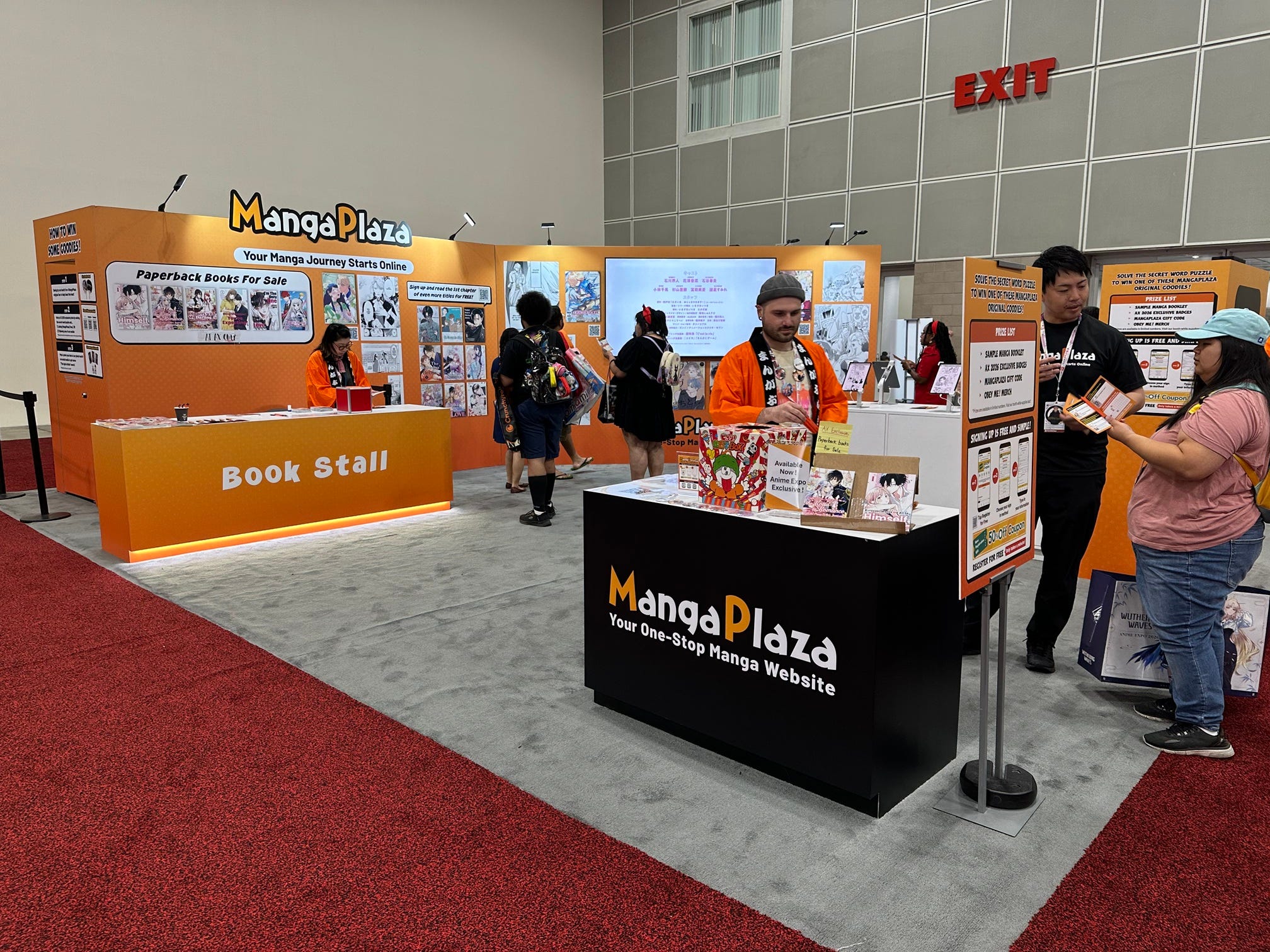
Digital manga platform MangaPlaza is gaining traction in its fifth year of operation in the United States, surpassing 1 million registered users at the end of July, its operator, Osaka-based e-book platform developer NTT Solmare, said this week.
Why it matters: Printed comic books make up the vast majority of manga sales in the North America, but MangaPlaza has found success in the digital space by tapping into an underserved female readership.
As previously reported by Animenomics, female users made up about 90 percent of the platform’s paying subscribers last year.
What they’re saying: NTT Solmare, which has also operated the digital manga and e-book platform Comic C’moA in Japan since 2004, has found a highly engaged base of readers and fans of adult romance and boys’ love manga across the ocean.
“While fan communities certainly exist in Japan, I get the impression that in North America, these communities are more extensively established and that users are more open about participating in them,” e-book division senior producer Daichi Katsuki told Animenomics in an interview during Anime Expo.
Manga publishers in North America are also starting to take notice of an engaged female readership that has grown up on manga, Publishers Weekly reported last year.
Zoom in: Thanks to relationships built through Comic C’moA, NTT Solmare has been able to accumulate titles from more than 120 publishers on MangaPlaza.
Both platforms also share a single team for marketing and technology operations, allowing lessons learned from operating Comic C’moA to be applied to operating MangaPlaza and vice versa.
The bigger picture: MangaPlaza is one of nearly a dozen Japanese-run digital manga platforms that have opened in North America since the COVID-19 pandemic as efforts to combat online piracy grow.
Yes, but: Not all platforms have found the same level of adoption among readers. Manga Mirai, a service operated by NTT Docomo, a cousin company of NTT Solmare, is closing at the end of this year and migrating content to MangaPlaza.
What we’re watching: Seeking to grow its presence in North America, NTT Solmare in February opened a subsidiary in Sunnyvale, Calif., as it looks to partner with Silicon Valley technology companies.
“If there are tools available that enable us to effectively to reach our customers on the website, we would like to utilize them and pursue such collaborations,” e-book division manager Ryusuke Ishii explained.
Go deeper: Read our interview with NTT Solmare leadership about MangaPlaza’s U.S. expansion and its strategies in North America and in Japan.
MangaPlaza is now in its fifth year of operation. In these four to five years, manga publishers and distributors have opened digital manga sites one after another in North America. How has the region’s digital manga market evolved from the viewpoint of NTT Solmare?
Daichi Katsuki, e-book division senior producer: Over the last four or five years, I believe the North American digital manga market has transitioned from its nascent stage into a period of growth. As you said, other companies have also been entering the market one after another. However, this is something we view very positively, as it helps to stimulate the market as a whole.
The shutdown of the pirate site Bato in January of this year has also made a significant positive impact on our business. We believe that users who previously relied on pirate sites are gradually adopting a habit of reading on official platforms like MangaPlaza since then.
Overall, I think a healthy market has been rapidly taking shape over the last four to five years.
I believe the works that are on Bato are translated unofficially by manga fans. Generally, have the works on MangaPlaza already been published and translated into English, or are they titles that have never been released in the United States?
Katsuki: When it comes to pirated editions, there are two main types of cases. One involves official materials being scanned and uploaded without permission, while the other involves fans taking it upon themselves to translate and upload the content.
Regarding the second question, there are cases where we receive officially translated versions from publishers, and there are also cases where we translate and distribute the material ourselves.
MangaPlaza has a specific focus on boys’ love, romance, and adult romance manga titles, which are popular among female readers. What are some similarities and difference that you have seen between the works and genres that female readers in North America and in Japan read?
Katsuki: When it comes to similarities, I think what’s universal across all countries are strong emotional connection to the characters, the ability to understand the depth of their psychological portrayals, and an appreciation for the beauty of the artwork, like the cover art. The overall aesthetic of the work seems to resonate across borders.
Another shared element is the fan community. While fan communities certainly exist in Japan, I get the impression that in North America, these communities are more extensively established and that users are more open about participating in them.
As for differences, when it comes to the romance genre specifically, North American readers tend to strongly prefer works where the heroine is an independent woman.
Also, this might be unique to our site, but within the boys’ love genre, subgenres like omegaverse [with male characters that can become pregnant] and beastman stories [featuring humanoid animal characters] are extremely popular. Boys’ love within high school settings is very popular in Japan, but the trend on our site leans toward fantasy-themed boys’ love.

If a work is popular in North America, does it generate interest back in Japan?
Katsuki: Since romance and boys’ love are already popular genres in Japan to begin with, we at MangaPlaza haven’t seen a pattern where something gains popularity in Japan simply because it became a hit in the United States
Given that the Japanese market is much larger, the impression I have is that popular genres are more comprehensively covered in Japan.
Support the journalism of Animenomics. By upgrading to a paid subscription, you gain access to insights on NTT Solmare’s approach to growing both its digital and print manga businesses, its stance on AI-generated manga, and more.
