


This is a bonus newsletter of Animenomics, covering the business of anime and manga. Today is Saturday, January 13, 2024.
Anime studios promote rural Japan, aid quake recovery
Few anime production facilities are located in central Japan’s Hokuriku region that was struck by an earthquake on New Year’s Day, but one important studio exists in the area: P.A. Works.
The company’s main studio was never at risk of being hit by a tsunami because of its inland location in Nanto, Toyama Prefecture, but founder and president Kenji Horikawa said on X (Twitter) that he had never felt aftershocks as strong as ones from this earthquake. P.A. Works later confirmed that its studio building did not suffer any major damage and that no staff members were injured.
P.A. Works is important to the Hokuriku region because it often creates anime with stories set in locations familiar to locals. They include Hanasaku Iroha, a series about a traditional Japanese inn in Ishikawa Prefecture, and last year’s Komada: A Whisky Family, a film inspired by the region’s last remaining whisky distillery. In the days since the earthquake, P.A. Works has been reintroducing its works to the public to generate awareness of and support for the area.
The role that anime studios play as promoters and cheerleaders of Japan’s outer prefecture is not new. In fact, the anime industry and stories that we see now are shaped by another disaster from over a decade ago—the earthquake and tsunami that struck northeastern Japan in 2011. This is evident even today in works such as Makoto Shinkai’s Suzume and Mari Okada’s Maboroshi.
Anime was not a global social media phenomenon yet in 2011. The struggles of the anime industry immediately following the disaster was not documented well in overseas media outlets, but some media coverage did exist. “Earthquake Rattles Japanese Animation Industry,” Bruce Kennedy wrote for AOL’s Daily Finance at the time, describing anime studios at a standstill because of rolling blackouts in Tokyo.
I entered anime journalism three years later, when anime was on the cusp of a new global boom. In the years that followed, I observed what Japanese cultural critic Tsunehiro Uno called “an underlying sense of the everyday imbued with the extraordinary”. By then, anime studios had returned to work and was producing content for a hungry global market, but the disaster had also left a mark on the industry.
Images of rural towns washed away by the tsunami placed renewed attention on the Japan’s aging outer regions. Many turned to anime culture to revitalize their local communities, and anime studios became partners in their endeavor. Others in the industry chose to start their own regional revitalization initiatives.
When I was working in Malaysia for MyAnimeList in 2016, I met an anime studio executive who led one regional revitalization effort: Yoshinori Asao. Asao is the president of Gaina, an anime studio spun off from Gainax (of Neon Genesis Evangelion fame) and originally named Fukushima Gainax. As the name suggests, the studio was founded in a region impacted by the 2011 tsunami.
I am now sharing excerpts of my interview with Asao, which has never been fully published. I believe readers will gain insight from his comments of how an anime studio can play a role in disaster recovery.
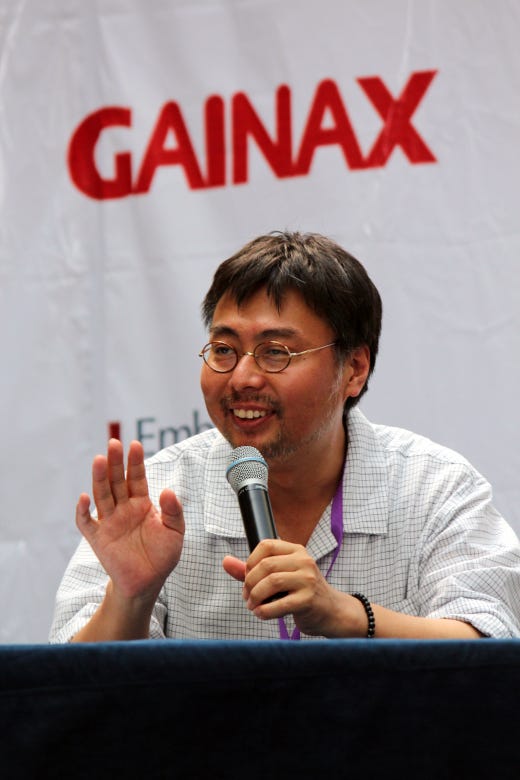
I include the original audio recording, which also contains the interpreter’s live translation of Asao’s answers, but the transcription below is my own translation:
Yoshinori Asao (translated): I myself am from Fukushima. However, long before the disaster, Gainax already had plans to build a new studio. That was about six to seven years ago [in 2009–2010]. The reason for this has to do with the fact that the population of young people in Japan is steadily decreasing. On the other hand, in Asia, in the Middle East, and in Africa, for example, the number of young people was increasing rapidly. The popularity of anime was also growing quickly, so we wanted to make anime together with overseas partners as soon as possible.
When we did some research in several countries; however, we realized that the way we make anime in Japan is very different from the way current CG titles, video games, and Hollywood-style anime are made. We came to the conclusion that it would be very difficult to do something with a foreign partner in the environment of the existing Japanese studio. Therefore, the main reason for creating the second studio was that I thought it would be faster for a new studio to plan from the beginning to work together with overseas studios.
At around that time, the major earthquake occurred, and the project came to a halt for a while. About two years after the earthquake, or maybe three years later, children and their families were still unable to return to Fukushima because the reconstruction was slow to progress, even after three years since the earthquake. As a result, there were a lot of buildings in Fukushima that were no longer in use, such as schools. We thought then if we built a studio and an anime museum there, even if the building does not become a school again, if we create an fun attraction, young people and families would come back to visit.
In addition, we wanted to start a new industry in Fukushima, and we think that new job opportunities can be created for young people there.
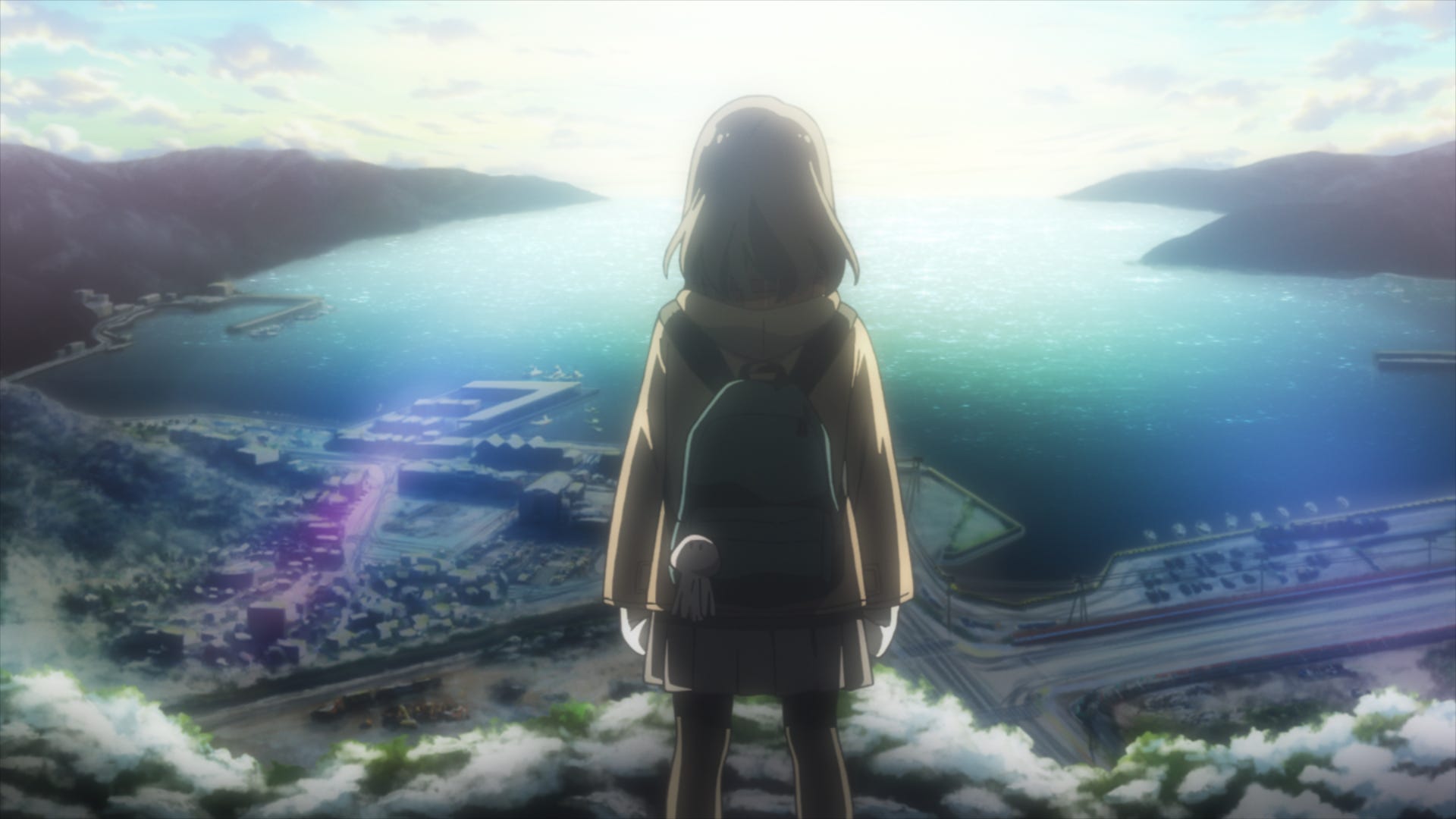
Months before I met Asao, Fukushima Gainax worked on an anime project called Omoi no Kakera, literally meaning fragments of feelings. Its story was set against a backdrop of the tsunami’s reconstruction efforts and was aired by Japan’s public broadcaster NHK. The anime was never officially released abroad.
I asked him about the work:
Yoshinori Asao (translated): We received a request from NHK to create Omoi no Kakera as a milestone to memorialize the fifth anniversary of the disaster. In the past five years, the word fukkō [復興], or reconstruction, has been present throughout Japan. Fuku [復] means to restore things to the way they were, and kō [興] has the meaning of causing something or starting something. The second phase of reconstruction will not be completed within five years, so we will mark a milestone and then move on to the next five years. This is the catalyst that resulted in us being asked to create a work for memorialization.
We traveled around Fukushima, Miyagi, and Iwate Prefectures, to the places that had a lot of tsunami damage. We set the story in the town of Onagawa, Miyagi Prefecture, which saw the most damage from the tsunami and disappeared as a whole. As for the earlier question of why figure skating, the figure skating scene is very popular in Miyagi Prefecture. It is home to Olympic gold medalists Yuzuru Hanyu and Shizuka Arakawa. Many children there learn figure skating to become [athletes] like them, so we made the main character a girl who does figure skating.
Omoi no Kakera was a two-minute project at first, but in that process we were asked to include events that actually happened during reconstruction, so we captured a project to restore photographs in the story. For families, homes, and towns that have been swept away, no records are left behind. When cleaning up the ruins, photos were found without knowing who the owners were, many of them dirty and torn. For example, when someone would go to find the place where their house used to be, there was nothing left, but everyone said they did not want to lose their memories, so they brought back a lot of photos. Some of them were still dirty, so there was a project where volunteers used digital technology to clean them up. We thought it was an amazing project, so we put a little bit of that project in the anime. In the middle of Omoi no Kakera, there is a scene where a photo arrives in an envelope, where a damaged family photo was repaired and is returned.
Speaking of fragments of feelings, five years is a very long time, especially for children. I think everyone still remembers, but five years is an extremely long time, so while they do not forget the disaster, their feelings are emotionally distant from it. But when looking at the photos, the feelings resurface. When they resurface, both the good memories and the sad memories return together, so the complex feelings of that moment are depicted in this work. In the setting of the story, the character is revealed to have lost her mother, so the memory of the mother serves as a motivation to push them forward and move on with their lives. It is a story about taking that step forward.
Originally, it was made as a two-minute promotion, but when it was broadcast, Yuzuru Hanyu and Shizuka Arakawa commented on it, and it was also very well received by people who watched it, so in the end it was made into and broadcast as a 30-minute drama.
For the Hokuriku region destroyed by the earthquake two weeks ago, there is a long road to recovery ahead. The stage of fuku, restoration, has only just begun, but I am certain that P.A. Works and other anime studios will play a future role in the kō, starting anew, stage of reconstruction.
Animenomics is an independently-run and reader-supported publication. If you enjoyed this newsletter, consider sharing it with others.