


This is your weekly Animenomics briefing, covering the business of anime and manga. Today is Wednesday, May 13, 2026.
In case you missed it: New York City will see not one but two anime business events this year, with Crunchyroll announcing plans to hold an invitation-only summit on the sidelines of New York Comic Con in October, just weeks after Anime NYC’s own anime licensing summit that was announced earlier this month.
Our thought bubble: I myself had been planning to attend New York Comic Con this year, so I’m eager to see how Crunchyroll’s increased presence will add to the event.
Anime production committee discourse finds traction
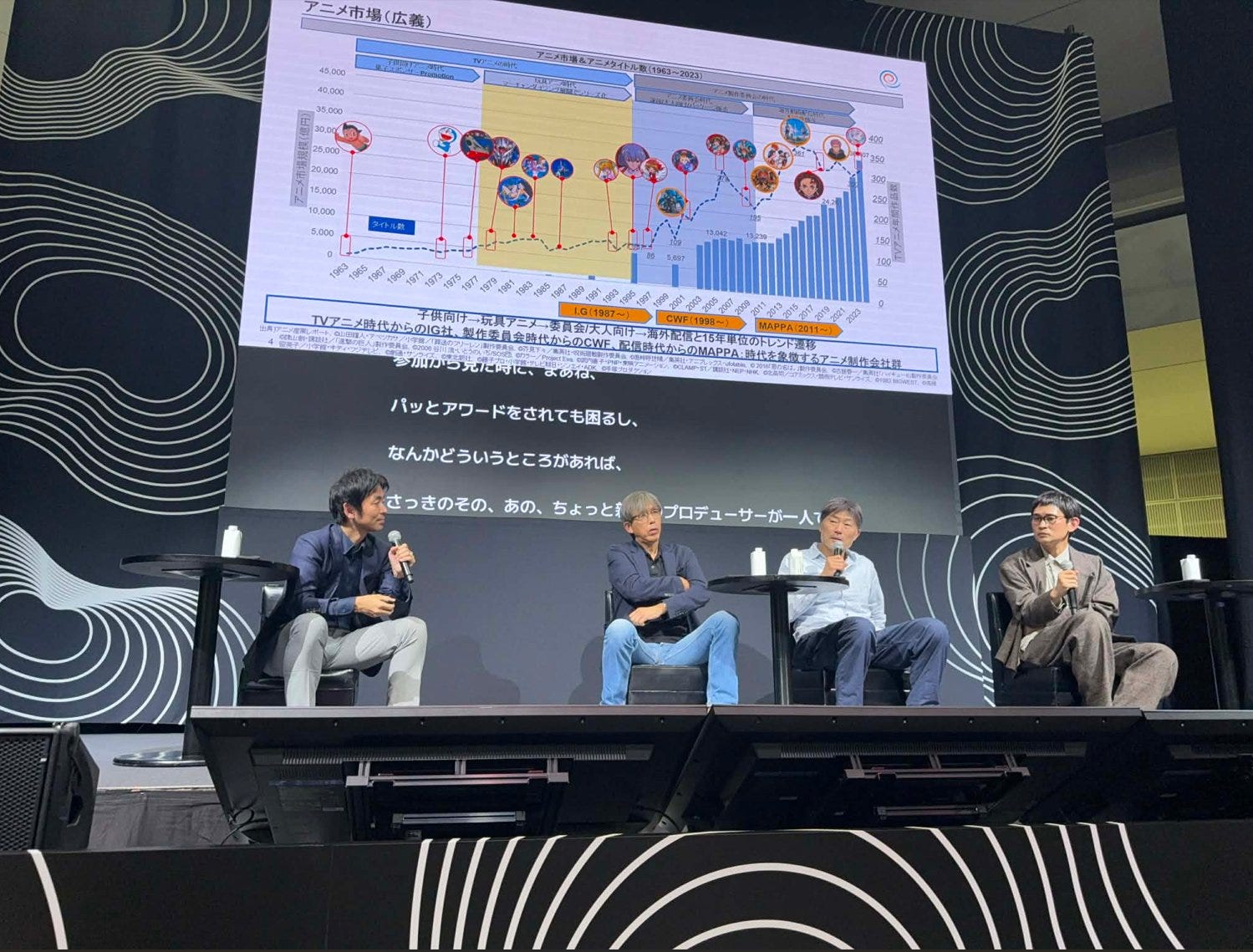
Growing scrutiny of the anime industry’s production committee model by regulators and news media is leading to increased interest over anime studios that are building alternative business models to retain ownership over their works.
Why it matters: Public interest in anime production reached a new high last month when SusHi Tech Tokyo, Asia’s largest startup event so far this year, hosted a panel with executives from anime studios Production I.G, CoMix Wave Films, and MAPPA.
How it happened: MAPPA president and chief executive officer Manabu Otsuka is a regular subject in Japanese media interviews about anime’s business model thanks to the studio choosing to be the sole financier of the Chainsaw Man anime series.
Production I.G has invested in the anime titles it creates since the 1980s, allowing the studio to no longer be entirely dependent on production committee contracts, and CoMix Wave Films has been able to earn overseas revenue from Makoto Shinkai’s original anime films.
Zoom out: Studio Chizu, the studio behind Mamoru Hosoda’s anime films, employs a newer business model called a limited liability partnership, which Japan introduced in 2005, to manage ownership of its titles.
Studio Chizu president and chief executive officer Yuichiro Saito, in an interview with the Nikkei financial newspaper, says an LLP established jointly with Nippon Television Network and Kadokawa acts as the sole rights manager for the studio’s entire catalog of works.
“By having the LLP handle exhibitions, film concerts, as well as negotiations with streaming platforms, we are now able to manage the value of our works over long-term spans of 50 or even 70 years, thereby enabling us to steadily build and accumulate our brand equity,” Saito told the Nikkei.
Reality check: As previously reported by Animenomics, Japan’s government likely won’t strictly regulate how anime production committees operate, especially since many in the anime industry still see benefits in committees.
However, statements by studio executives like Studio Chizu’s Saito and CoMix Wave Films chairman Noritaka Kawaguchi highlight a need for the anime industry to look beyond the proliferation of production committees that are established to create short-term anime projects.
Genda stumbles in North America arcade revitalization
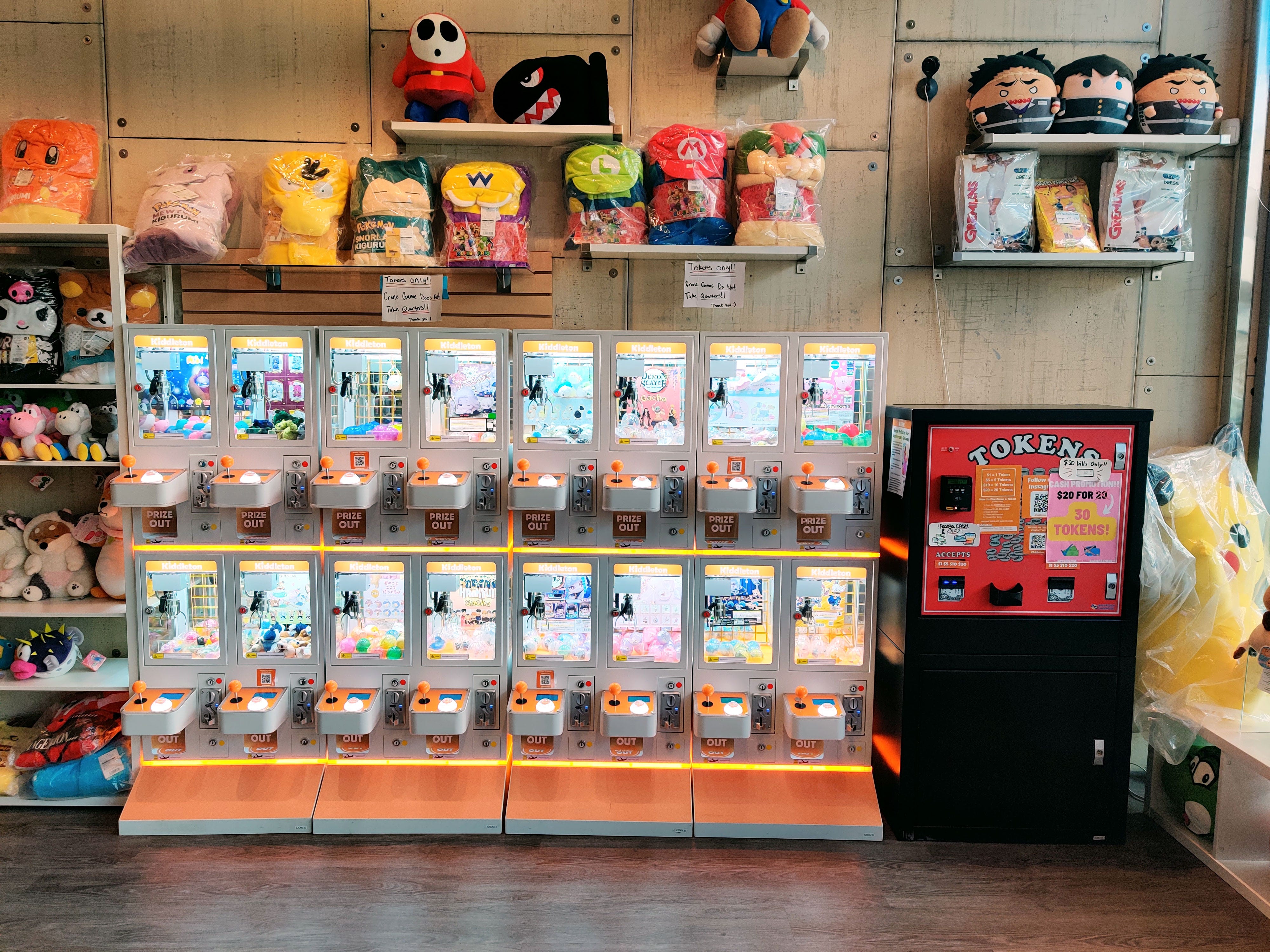
Genda is on a quest to rejuvenate North America’s arcade gaming corners with claw machines containing anime prizes, but it faces logistical problems that reflect the challenges Japan’s anime merchandise distributors face in the sprawling territory.
Why it matters: Outside Japan, anime media consumption leads all other spending like merchandise and events, and rightsholders are racing to build infrastructure to reduce reliance on content revenue and increase merchandise availability overseas.
As previously reported by Animenomics, Genda is turning the more than 13,000 arcade gaming sites it has acquired in North America since 2024 into merchandise distribution points for anime like Naruto and My Hero Academia.
Catch up quick: Genda management noticed in November that sales were starting to decline despite originally tripling early last year as the company started adding claw machines with anime merchandise as prizes.
Genda had asked merchandisers at National Entertainment Network, an operator of unmanned arcade game corners it purchased in 2024, to make daily store visits and bank deposits, which is the operating model used at Player One Amusement Group, an operator of manned arcade centers acquired the following year.
The company, however, didn’t account for the difference between NEN’s 10,000 unmanned corners and Player One’s 110 manned sites, leading to prize shortages as NEN merchandisers struggled to restock all their assigned locations.
What happened: “NEN’s approximately 200 field merchandisers were overwhelmed by the high-hurdle task of visiting four to five locations daily while also making bank runs, despite the fact that distances between stores in North America are unlike Japan and require one to two hours of driving,” Genda told investors in March.
Where things stand: Earlier this year, Genda introduced an internal software called Kiddleton Force to reduce manual cash counting and to help merchandisers better plan routes and anticipate prize replenishment needs.
Already, the app’s introduction is “leading to a recovery in the frequency of store visits by our staff”, the company followed up with investors this week.
What’s next: Genda plans to increase procurement of Japanese anime and character merchandise to between 60 and 70 percent of the total procurement cost in its North American business, triple the level seen two fiscal years ago.
Clippings: Crunchyroll surpasses 21 million subscribers
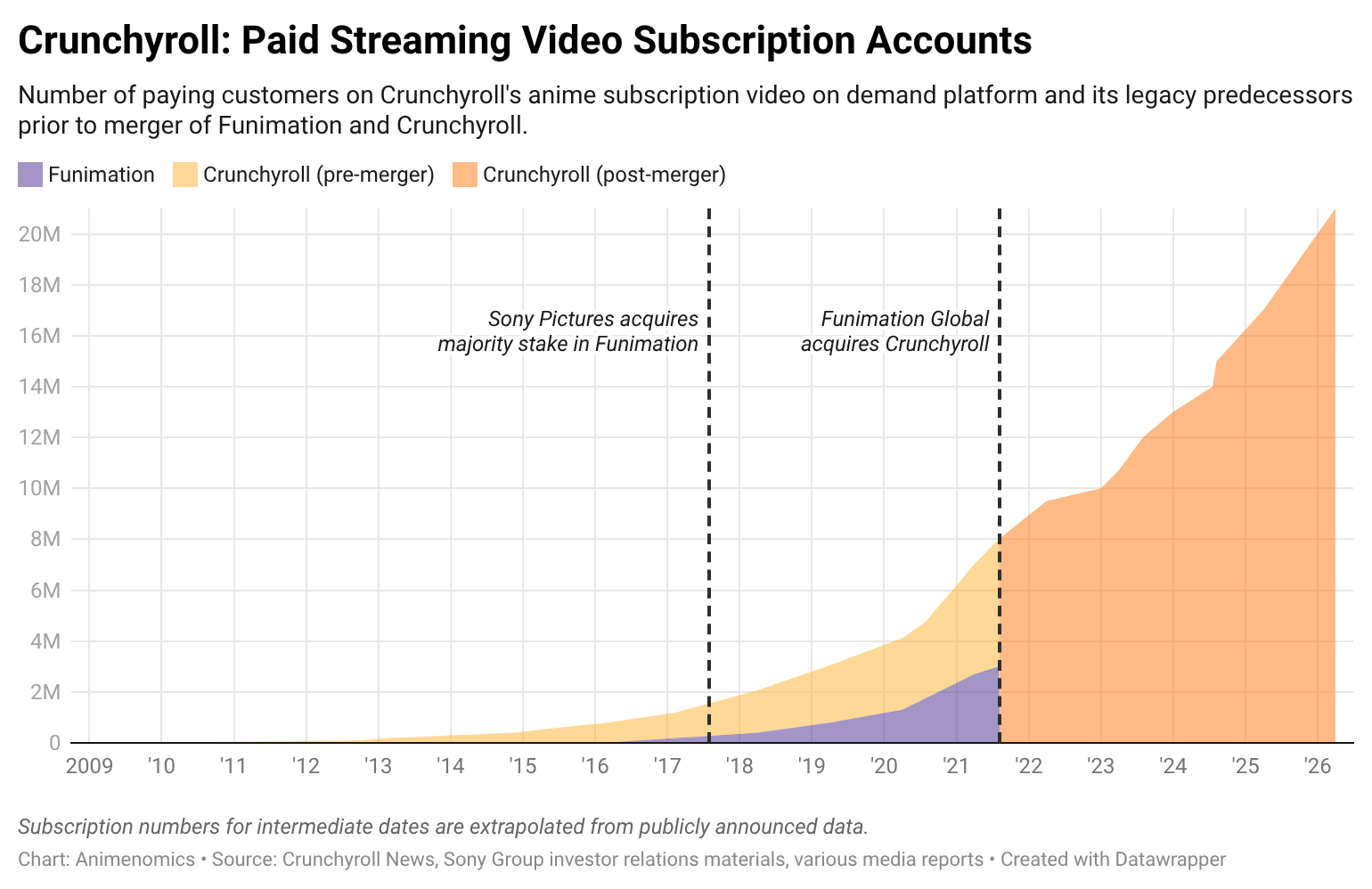
Anime streaming service Crunchyroll surpassed 21 million paying subscribers as of the end of March, a 24 percent increase compared to the same time last year. (Sony Corporate Strategy Presentation)
A Sony data team has been responsible for increasing the marketing efficiency of the company’s films, like Demon Slayer: Infinity Castle, and uncovering latent fans whose family members might be interested in the titles. (Nikkei Asia)
Pachinko machine maker Fujishoji established a subsidiary to invest in new anime productions as Japan’s gambling machine makers increasingly rely on collaborations with anime properties to draw new players. (Otaku Lab)
Kinokuniya Book Stores of America’s sales of English-language manga are now four times 2019 levels, Kinokuniya executive vice president Keijiro Mori told attendees of a seminar in Tokyo last month. (The Bunka News)
Pirate webtoon website closures led to double-digit jumps in the average daily new installs of leading South Korean webtoon platforms Naver Webtoon, Kakao Page, and Ridibooks. (The Chosun Biz)
Anime remains popular in China amid ongoing diplomatic tensions between Beijing and Tokyo as Chinese consumers flocked to anime stores and events over the May Day holiday period. (The Yomiuri Shimbun)
Toho takes control of IP promotion across all markets
“We have transitioned from a passive licensing-only model to a proactive structure where we manage promotions ourselves to enhance IP value. For titles with confirmed release dates, we begin marketing more than six months in advance, aiming to maintain constant engagement with fans even between major releases.”
— Hiroyasu Matsuoka, Toho president and chief executive officer
Context: Matsuoka, answering questions after Toho’s year-end earnings presentation last month, detailed the evolution of the operations of its Los Angeles subsidiary while also addressing developments since its GKIDS acquisition.
“The M&A of GKIDS was a significant achievement,” he lauded. “Their prestige in the anime world is unparalleled, and their integration into our group has allowed us to handle original IP-based anime and motion picture productions like Kokuho, which was previously out of reach.”
What’s next: “We intend to expand this model to Asia and Europe,” Matsuoka said, pointing to the expansion of Toho Entertainment Asia in Singapore and new efforts to replicate the North American model in Europe through its Anime Limited acquisition.
Animenomics is an independently run and reader-supported publication. If you enjoyed this newsletter, consider sharing it with others.