


This is your weekly Animenomics briefing, covering the business of anime and manga. Today is Wednesday, March 18, 2026.
Programming note: This weekly news briefing is going on a break and will return on April 8. I will be publishing a couple of special reports to fill the gap until that date.
What’s happening: I am traveling to Tokyo to attend both IMART Global Business Matching and AnimeJapan. If you’re also attending and would like to meet, do reach out.
Original anime films lag behind franchises in box office
Recent successes among franchise anime films in the box office have raised audience expectations for production quality and viewing experience across the board, putting pressure on budget-strapped original anime film productions.
Why it matters: Growing polarization in Japan’s anime film market risks crowding out original anime films that serve as incubators of new talent, a panel of anime creators, producers, and critics argued at this year’s Tokyo Anime Award Festival.
What’s happening: Original anime films have rarely earned more than ¥3 billion (US$19 million) domestically in recent years, while franchise films like Demon Slayer can reach ten times that amount.
Streaming video services are changing viewing habits—audiences can quickly watch shows in advance before switching to sequels that are screening in cinemas.
For works with a pre-established following, viewing a film in cinemas becomes a demonstration of fan devotion, such as to a favorite character, leading to repeat attendance and increased engagement.
Friction point: High-quality productions like Demon Slayer are also leading audiences to expect the same quality from original anime films, raising production costs and risk.
Original anime films can also four to five years to produce, much longer than the time it takes to bring a franchise film to market.
Zoom out: Even among television shows, books, and other media, hit titles generate massive revenue, while others barely register, TMS Entertainment president Tadashi Takezaki highlighted during the panel.
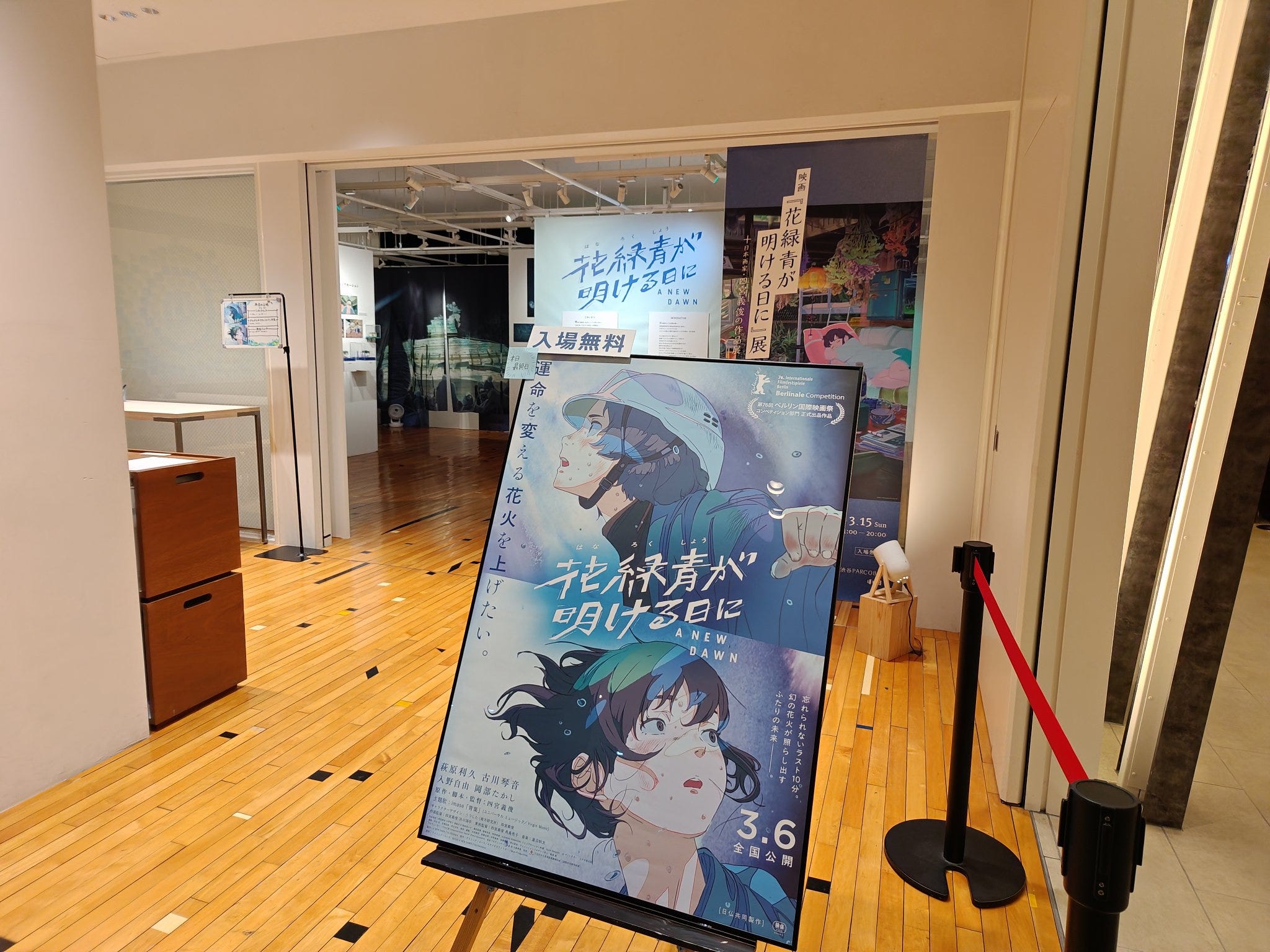
Earlier this month, the original anime film A New Dawn from animator Yoshitoshi Shinomiya and co-produced by France’s Miyu Productions earned just ¥17 million (US$107,000) in its opening weekend in Japan, overshadowed by wider releases from established titles like Doraemon and That Time I Got Reincarnated as a Slime.
Kadokawa seeks to move manga translations in-house

Publishing giant Kadokawa is moving to centralize translation of its books and manga before they are licensed out to foreign publishers in an effort to speed up the process of bringing new titles overseas.
Why it matters: In-house translation provides foreign licensees with works that are nearly ready for publication, shortening the time gap between a Japanese release and a foreign release when pirated copies could appear.
“We have now begun initiatives to translate works internally first—specifically those titles we wish to introduce to overseas markets,” Kadokawa chief global officer Takashi Sensui told The Bunka News trade newspaper.
How it happened: Since 2022, Kadokawa has been operating a Content Localization and Activation Center that produces English, Chinese, and other translations in-house.
Works translated by CLAC are released by local publishing partners outside Japan and also distributed digitally on Kadokawa’s own BookWalker platform.
A 2024 report by Japan’s Ministry of Economy, Trade, and Industry suggested that CLAC was also experimenting with artificial intelligence in the translation process.
That same year, Kadokawa and three other manga publishers collectively invested ¥780 million (US$4.9 million) in Mantra, a Japanese startup that uses AI to deliver manga translations in 18 languages.
The bigger picture: Kadokawa’s current five-year roadmap calls for a target of ¥70 billion (US$440 million) in consolidated sales overseas by 2028, about 20 percent of total revenue.
Kadokawa operates 21 subsidiaries in nearly a dozen territories, and in-house translation allows the publisher to quickly circulate works across all of its overseas units.
Clippings: Webtoon paid creators US$2.8b over 5 years
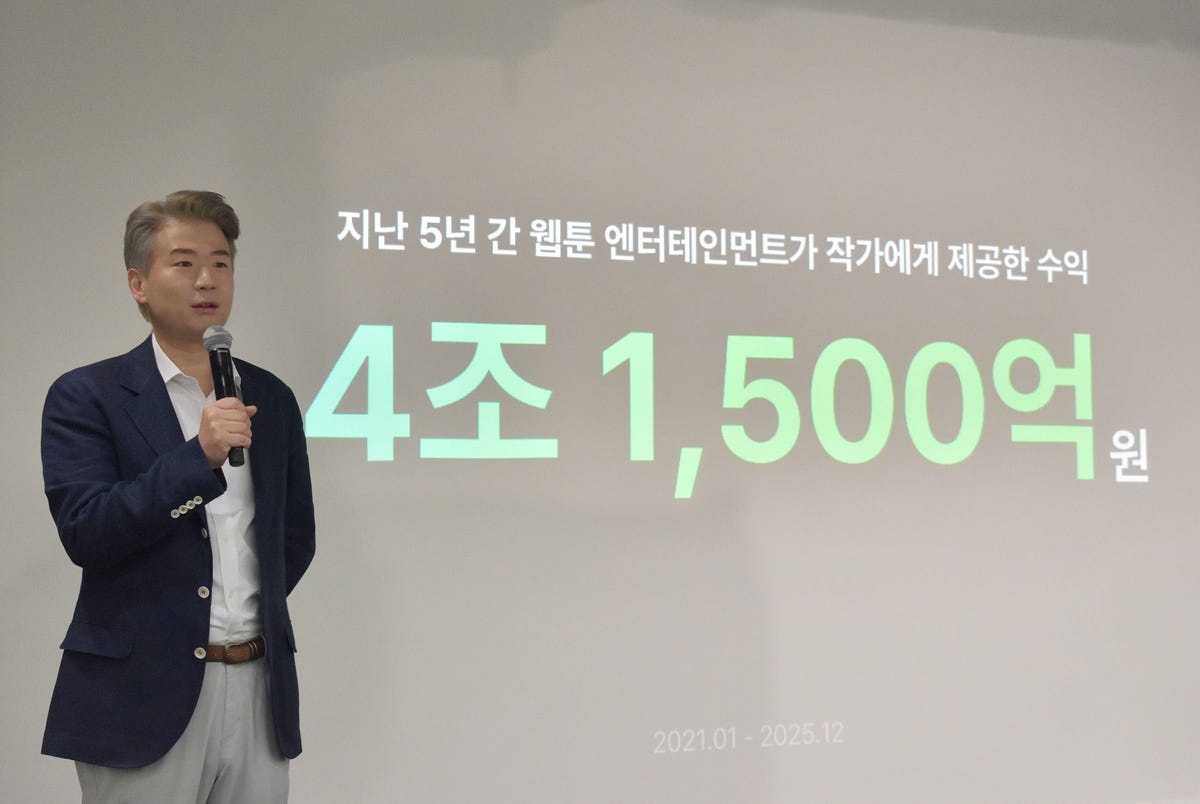
Naver-owned Webtoon Entertainment paid webcomic and webnovel creators on its various digital platforms a cumulative ₩4.15 trillion (US$2.8 billion) in revenue share between 2021 and 2025. (The Korea Times)
Why it matters: It’s the first time Webtoon has disclosed creator revenue share figures since its 2023 prospectus for listing on the Nasdaq stock exchange, when it said that it had paid creators a cumulative US$1.8 billion from 2017 to 2022.
Webtoon president Yongsoo Kim said the company will invest at least ₩70 billion (US$47 million) this year in creator support initiatives and content discovery.
Amazon MGM Studios hired Buddy Marini, a longtime entertainment executive who was general manager of Warner Bros. Discovery Japan until recently, to oversee film, television, and anime originals production in Japan. (Screen Daily)
Between the lines: Marini’s departure from Warner Bros. Discovery Japan leaves uncertainty at the prolific anime producer as its Hollywood parent seeks a sale to Paramount Skydance.
Mamoru Hosoda’s Scarlet made a disappointing box office debut in anime-loving France last week, drawing just 1,300 admissions across more than 260 screenings on opening day. (Boxoffice Pro)
Sony Pictures, which is distributing Scarlet worldwide, reportedly declined to fly Hosoda for interviews with French media, AnimeLand magazine editor-in-chief Bruno de la Cruz wrote on X.
E-commerce layoffs at Crunchyroll suggest the company is pivoting its online retail business—acquired from Iowa-based Right Stuf in 2022—away from a broad catalog model and toward subscriber-exclusive merchandise. (The Accidental Otaku)
Anime film revival screenings are increasing in frequency in Japan and around the world, fueled by anniversaries and production of remasters, as audiences increasingly prioritize known titles when going to cinemas. (The Japan Times)
London-based 8 Lions Entertainment acquired global digital distribution rights for TV Asahi’s Ninja Hattori, one of Japan’s longest anime series by episode count, and will start streaming it on YouTube in multiple languages. (Variety)
Sales of animation cels discarded by anime studios are soaring at secondhand anime merchandise stores as collectors and resellers outside Japan seek out materials from iconic productions. (Nikkei Asia)
Japan deepens Saudi manga artist training partnerships
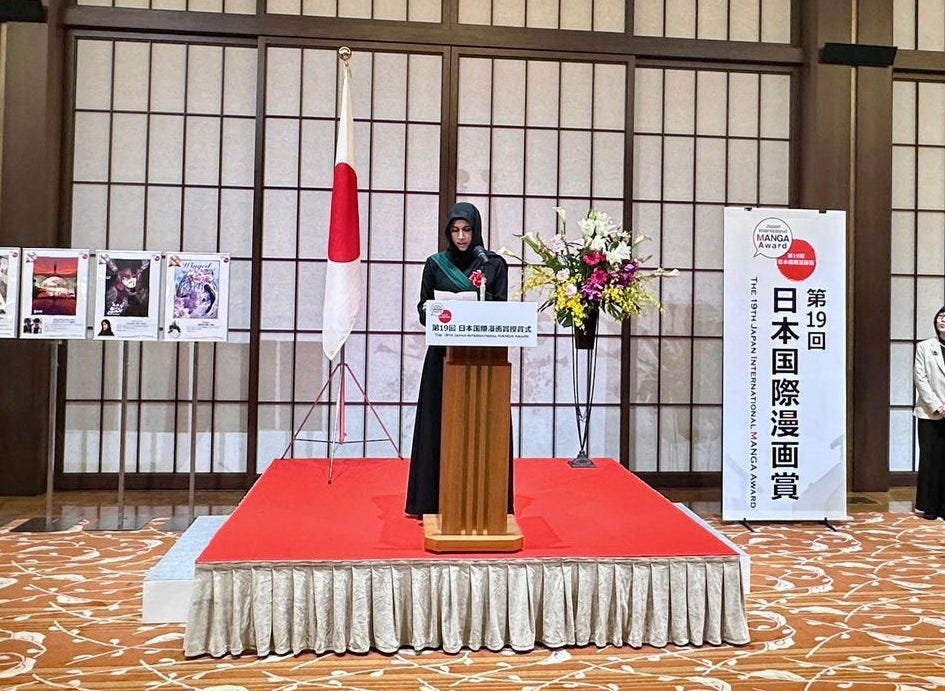
A comic from Saudi Arabia was named a runner-up in the 19th Japan International Manga Awards in December, the highest placement of a work by a Saudi artist in the contest that’s sponsored by Japan’s Ministry of Foreign Affairs.
Why it matters: Japan and Saudi Arabia continue to deepen a collaboration to train young Saudi artists in manga and anime production, producing a pipeline of foreign talent for the manga and anime industries.
Catch up quick: At manga publisher Kadokawa, more than 200 Saudi artists to date have been trained in manga production in partnership with Manga Productions and the Saudi government, former Kadokawa Content Academy head Tetsuya Koga said during a panel discussion at this year’s Tokyo Anime Award Festival.
Female creators make up about 60 percent of trainees, often favoring emotional storytelling and genres like horror.
Story development and composition training occurred both in Riyadh and Tokyo, including internships at Japanese publishers and studios.
Yes, but: While some Kadokawa Content Academy graduates have made their debuts as manga artists in Japan, not everyone will be able to pursue a career in manga.
Koga, who now works at Tokyo-based IP production studio Hike, says his new company plans to go beyond manga and explore collaborating on animation and 2.5D musical projects in Saudi Arabia.
Animenomics is an independently run and reader-supported publication. If you enjoyed this newsletter, consider sharing it with others.
Fascinating, so both franchises and older anime are "semi-killing" new productions.
What I fail to see from an overseas perspective, is an adequate promotion of new original anime. But of course Scarlet got to be on some cinemas less than a week here (Spain) and the idea of animation movies being for kids is still very much ingrained in part of the population. But still, the Your Name 10th Anniversary projections here have been much more crowded than any other anime bigscreen production lately —even surpassing the franchise ones I'd say.
Some of the new original ones will end up as cult movies but they have few chances of getting anywhere near of profitable (in comparison). And, as media tipically rewards more attention to what is already popular vs what is high-quality, many will not discover those movies unless they talk with anime connoisseurs in chats, forums or social media.