


This is your weekly Animenomics briefing, covering the business of anime and manga. Today is Wednesday, June 17, 2026.
In case you missed it: The Foreign Correspondents’ Club of Japan will host an anime panel next week with Tetsu Fujimura, the founder of film distributor Gaga and producer of live-action One Piece whose Cannes Film Market presentation last month became a topic of discussion in film industry circles.
Kodansha starts manga publishing joint venture in India
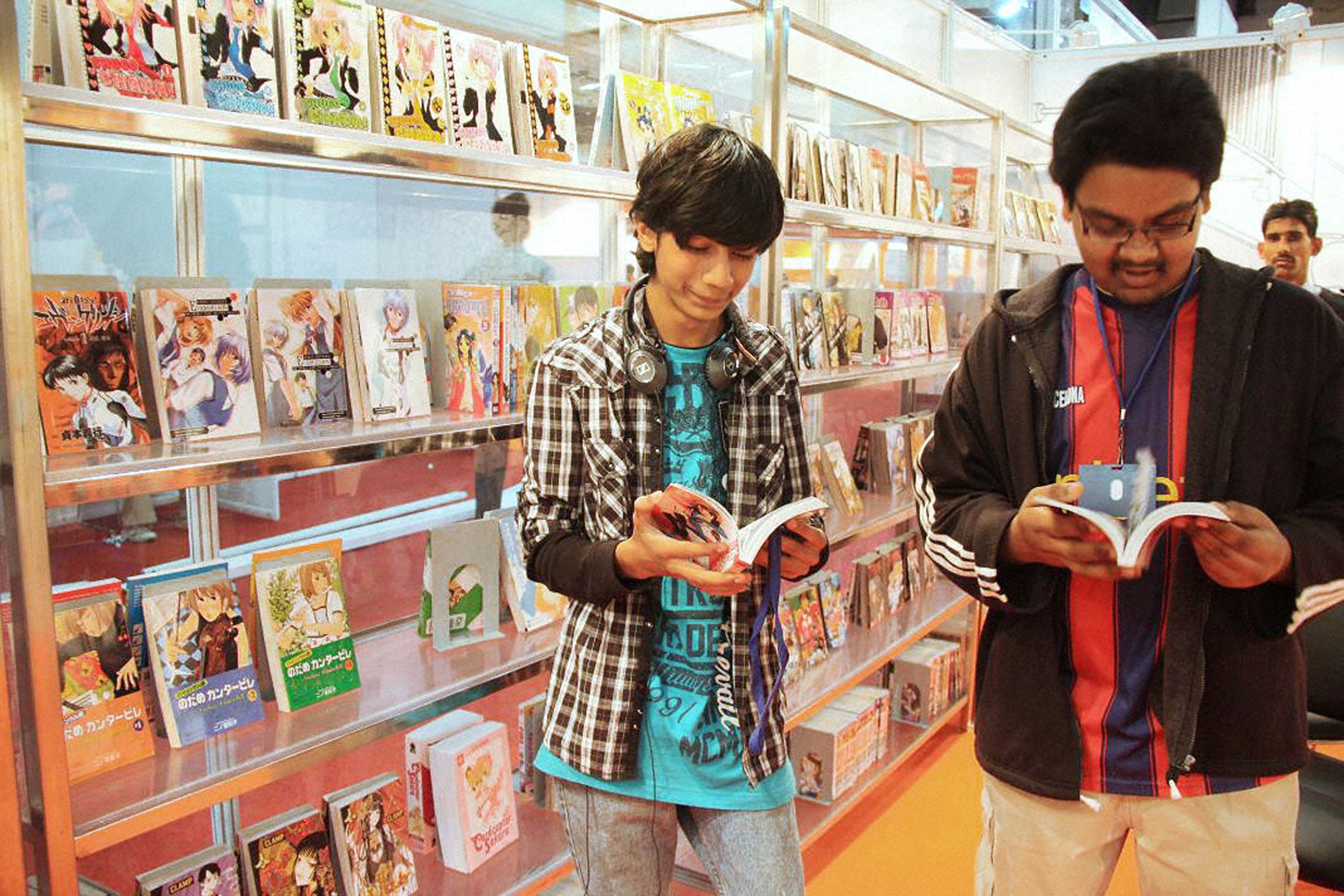
Kodansha will begin localizing and publishing manga in India this autumn, becoming the first Japanese publisher to enter the emerging market through a new joint venture with printing giant Dai Nippon Printing.
Why it matters: India is a rapidly growing market for anime and manga, but Japanese rightsholders often hesitate to directly enter business in the country due to high levels of content piracy and complex regulations.
How it happened: Consulting services firm IJ Kakehashi, whose chief executive officer Sanjay Panda helped Kodansha negotiate a children’s book deal with India’s National Book Trust in 2017, is supporting the joint venture with a 5 percent stake.
The details: Kodansha aims to put out 200 manga releases a year in English and Hindi, printing them in the country in order to take advantage of lower printing costs and compete with pirated editions, the Nikkei financial newspaper reports.
Kodansha imports English-language editions of popular soccer manga Blue Lock from its subsidiary in the United States and sells them at about ₹1,100 (US$11.60) each, but street vendors sell pirated editions at a fraction of the price.
“Import costs are a common complaint of manga readers in India,” Varun Gupta, chief executive officer of Los Angeles-based publisher Manga Mavericks Books, which prints some of its manga in India, told Animenomics. “There are printers in India that have lower unit prices than even China, so this makes it very beneficial when trying to print for the domestic market there.”
Between the lines: Kodansha’s choice of working with Japan’s DNP, which has been expanding in India this year and took a 14 percent stake in the venture, instead of a local printer is notable.
Quality control is a major concern “as a lot of printers in India simply aren’t used to printing manga”, Gupta said, recalling his experience in working with multiple printers in Mumbai region and finding bewildering printing mistakes.
“One book was printed upside down, while another had the spine breaking apart,” he noted. “Neither of these books are difficult to print in concept, but the floor for quality at some printers in India can be far too low for comfort at times.”
Disney+ France adds titles from French anime streamer

Animation Digital Network, the anime streaming video service provider bought out by French publishing conglomerate Média-Participations from Crunchyroll in 2022, will share about 8 percent of its 18,000-episode anime catalog with Disney+ France.
Why it matters: The new collaboration between ADN and The Walt Disney Company France brings new anime content to an estimated 10 million Disney+ subscribers in France without any additional fees.
Disney+ already has anime titles like One Piece, Bleach: Thousand-Year Blood War, and Dragon Ball Z Kai in its own catalog in France.
Zoom in: Anime series being added to Disney+ France include Naruto, Assassination Classroom, The Eminence in Shadow, and more, totaling over 1,500 episodes.
ADN will also supply the streaming service with several simulcast titles every year at the same time those anime series are released in Japan.
The partnership will also bring in Disney+ as a potential co-producer for any of ADN’s original French productions, part of a commitment made last year to invest 25 percent of its annual revenue in France into French and European productions.
The bigger picture: Disney+ France’s partnership with ADN comes just one day after it signed a live sports broadcasting deal with sports television channel L'Équipe.
“Without a steady flow of new tentpoles […] Disney+ needs content that brings viewers back weekly rather than only when the next big release drops,” streaming video consultant Marion Ranchet writes. “Live sports and simulcast anime both do that.”
Clippings: Japan weighs dissolution of Cool Japan Fund

Japan’s government is considering abolishing the public–private Cool Japan Fund as losses from investments that were intended to help export Japanese culture continue to mount, reaching ¥38.3 billion (US$239 million) in cumulative losses over 11 years as of March 2025. (Kyodo News)
Cool Japan Fund made significant investments in anime, including funding a joint venture that operated an anime streaming service from 2013 to 2017 and giving bridge funding for MAPPA’s Chainsaw Man production.
“While investing in anime streaming abroad seemed like the right strategic move on the surface, the initiative was launched just as platforms like Netflix were already successfully streaming anime globally,” anime critic Kiyoshi Tane writes in a recent column. “In retrospect, the framework seems almost self-defeating.”
Japan’s Agency for Cultural Affairs is convening the first meeting of a consortium of manga publishers and distributors this week to discuss the creation of a global digital manga platform and training for manga translators. (Agency for Cultural Affairs)
Anime retailer Benelic will open a Studio Ghibli-branded Donguri Republic pop-up store in the United States for the first time, months after its U.S. subsidiary opened a Shonen Jump pop-up store at the same location last year. (VIZ Media)
Mobile gaming company KLab is producing an anime film titled The Celebrity Secret using artificial intelligence to be released next year. The film is based on bestselling Kadokawa novel Why Is a Celebrity’s Bag So Small? (Gamebiz)
Japan’s Gunma Prefecture will establish a school for film, animation and video game creators, setting aside ¥147 million (US$918,000) for curriculum planning in order to meet the goal of opening in 2027. (The Mainichi)
81 Produce seeks to transform voice actor work with AI
“Considering the state of the voice acting industry, simply being good at delivering lines or having a nice voice is no longer enough to make a living.”
— Michiyoshi Minamisawa, 81 Produce president and chief executive officer
Context: In an impassioned presentation at the inaugural Japan–China International Animation Film Festival last month, Minamisawa, who leads Japan’s largest voice actor agency with over 400 talents on its roster, outlined a vision for transforming Japanese voice actors’ voice data into intellectual property that can earn licensing revenue.
Catch up quick: In December, 81 Produce formed a partnership with speech synthesis startup ElevenLabs that aims to deliver anime and other Japanese programs overseas in other languages, using Japanese actors’ voices, with the help of artificial intelligence.
What he’s saying: Minamisawa believes Japan’ s voice actor industry can coexist with generative AI technology by using it to ensure that talents receive a share of royalties from the increased demand for Japanese content.
AI isn’t the first disruption to voice acting work, he noted, pointing to the trend of Japanese comedians and screen actors often being cast for voice work over voice actors about a decade ago.
The number of active voice actors in Japan has also swelled to more than 10,000, creating more competition domestically, and allowing actors to license their voice data for use abroad with AI can help them find more work, Minamisawa argues.
1 chart to go: Some U.S. manga buyers also pirate them
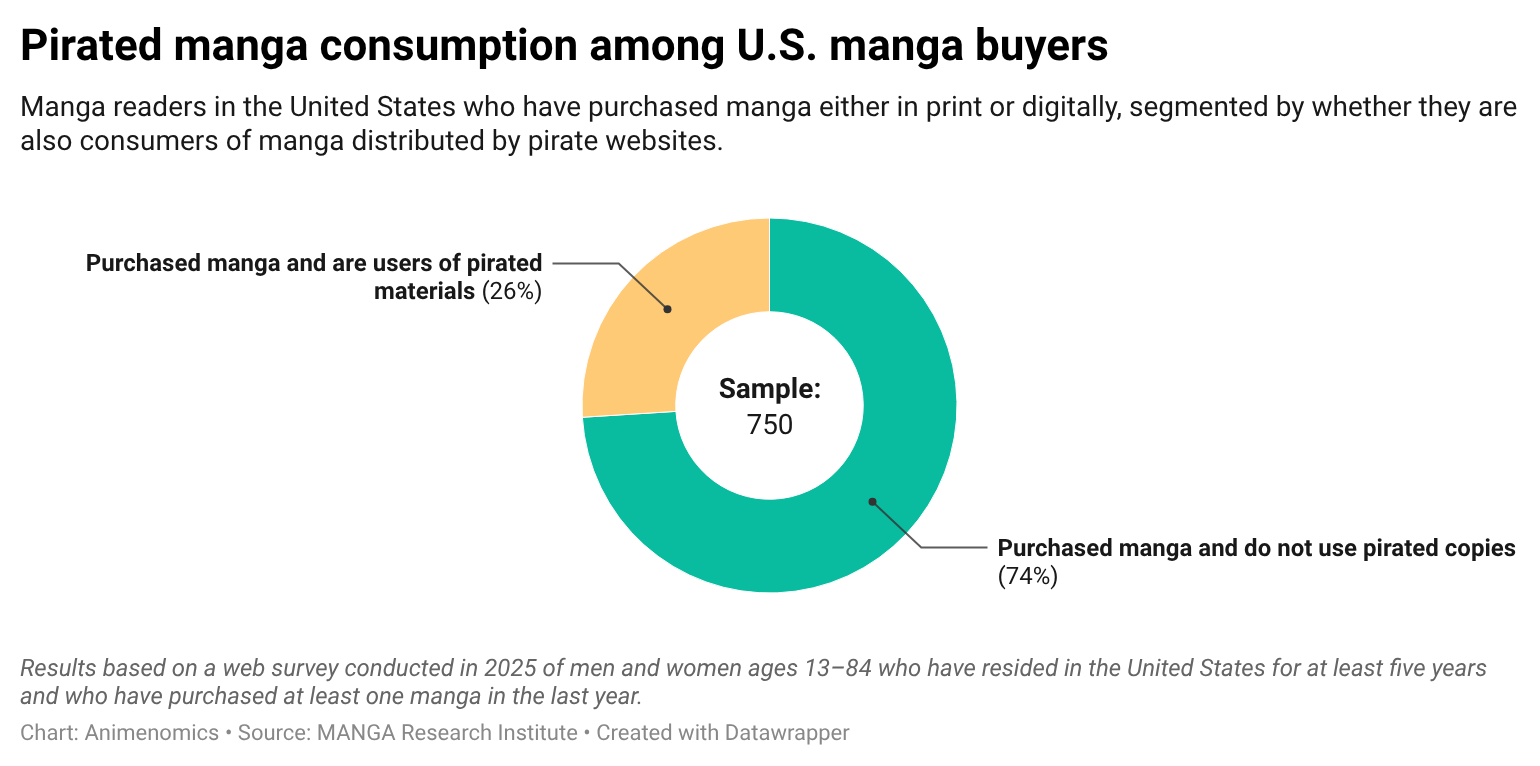
One in four manga readers in the United States who have made a manga purchase in print or digitally in 2025 has also read pirated manga online, according to a survey by Tokyo-based MANGA Research Institute that was published earlier this year.
What’s happening: Institute representative director Takeshi Kikuchi, speaking about the survey’s findings to the Japan Electronic Publishing Association in April, said that these manga buyers typically use pirate websites like customers browsing a bookstore.
Animenomics is an independently run and reader-supported publication. If you enjoyed this newsletter, consider sharing it with others.
The reason Cool Japan failed is because the investments made, for the most part were not built on any real insights, data and analytics from outside Japan. No foreign partners and distributors were consulted. Decisions were made in private behind closed doors. The whole enterprise lacked transparency and accountability.
I'm curious to know what is the voice actor's general opinion about transforming voice data into intellectual property and using it to train AI. Maybe that's something to protect them, but could create a situation where companies put this as a condition to play roles, so with high competition they have no option besides agreeing.
Thanks for this great post!