


This is a feature story from Animenomics, covering the business of anime and manga.
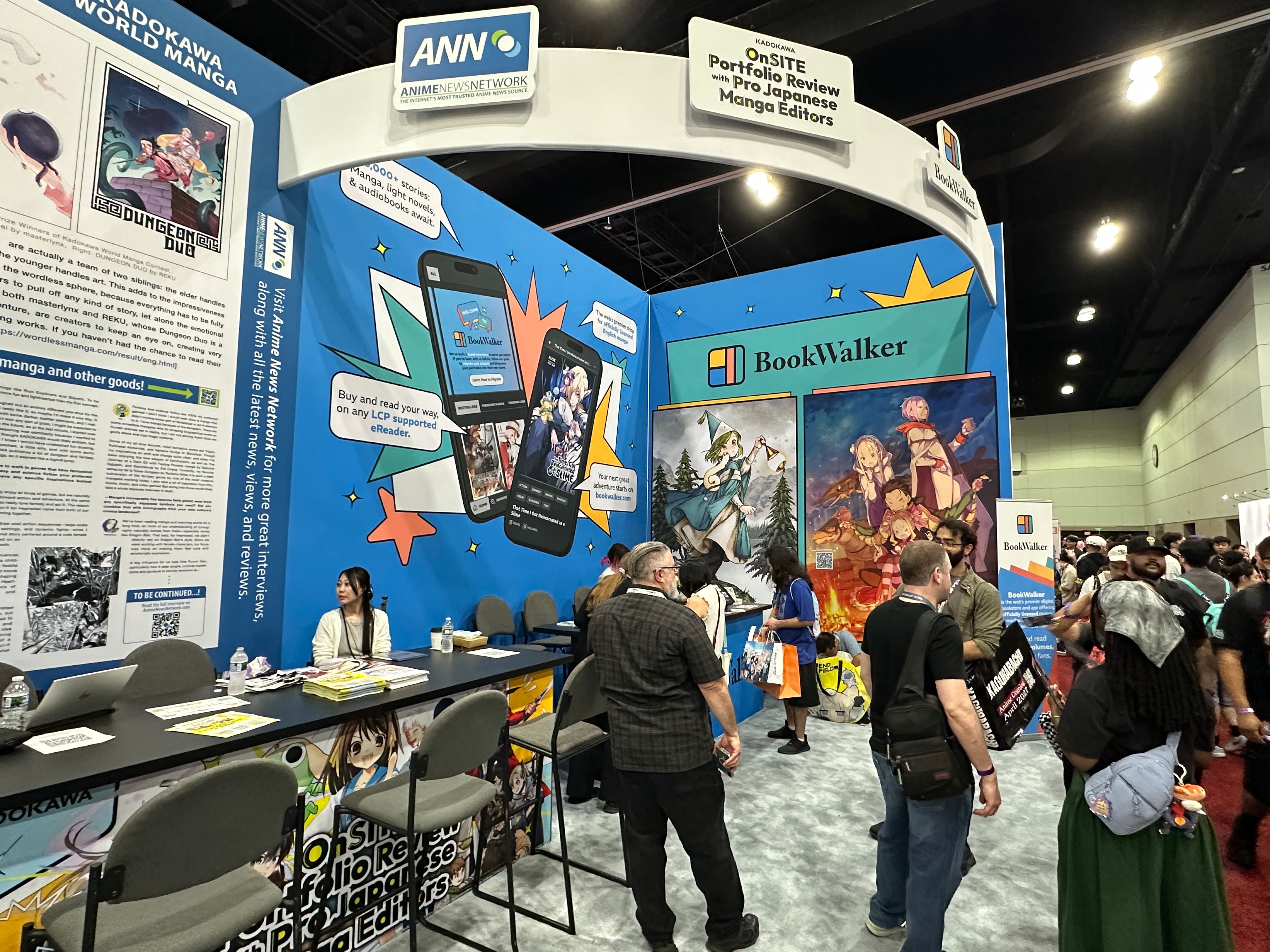
BookWalker Global is now the first commercial e-book service owned by a Japanese company to adopt an open, vendor-neutral standard for digital rights management, deploying the European Digital Reading Lab’s Licensed Content Protection standard.
Driving the story: Kadokawa last month completed the move of its English-language BookWalker Global e-book store to a new platform operated by M12 Media, a Texas-based subsidiary that also runs the digital light novel publisher J-Novel Club.
“The most important thing is getting the best experience for users and the best ecosystem for them to buy manga, light novels, and audiobooks and read it on our site,” M12 Media chief executive officer Samuel Pinansky told Animenomics in an interview earlier this year.
What they’re saying: The LCP standard allows the new English-language BookWalker service to meet demand from readers for more compatibility of its e-books with other platforms and to ensure the reliability of its own platform, Pinansky explains.
For consumers, the adoption of an internationally governed open standard also ensures that BookWalker isn’t able to unilaterally change the terms of its e-book licenses and take away readers’ access to titles they have already purchased.
“We’re trying to break out of this idea of a proprietary Galapagos system that is only for BookWalker and use more and more industry standards as we can,” he elaborated. “It’s good for us as a business, but ultimately, it’s also good for our business partners.”
Instead of using other DRM solutions that impose a flat fee for every e-book sold, the new platform takes advantage of LCP DRM’s revenue-based pricing, making it more affordable for M12 Media to maintain.
The bigger picture: The Japan Electronic Publishing Association, whose mission is to develop and expand the country’s e-book publishing industry, has advocated for wider adoption of the LCP standard due to its potential benefits of increasing accessibility.
In a presentation to JEPA members in November, EDRLab leadership highlighted the LCP standard’s growing use among libraries, publishers, and e-book platforms around the world.
Kobo e-book readers by Japanese technology conglomerate Rakuten are already planned to transition into using the LCP standard sometime this year.
What’s next: Pinansky wants the new BookWalker platform to also serve its publisher partners by helping them streamline e-book delivery to other platforms.
“We’re also planning on adopting an open specification for publisher royalty reporting, which is not yet widespread in the publishing industry, but we hope they’ll become more widespread.”
Go deeper: Read the first part of our interview with M12 Media chief executive officer Samuel Pinansky about the relaunch of BookWalker Global’s e-book platform below.
BookWalker supports more than just light novels. It also supports manga and audiobooks. Since joining Kadokawa and BookWalker from J-Novel Club, what have you learned about how that side of the business operates versus just the digital light novel publishing side?
At J-Novel Club, we work directly with all kinds of e-book stores, whether it’s Amazon, Google, iBooks, or BookWalker itself. BookWalker Global is very much a boutique e-book store. It’s not like iBooks, Kobo, or Nook, where the goal of those e-book stores is to publish all the books. Those stores aren’t sitting here going, “Well, we don’t want this because it’s not the kind of thing that our audience would want.” Each publisher has a representative on BookWalker’s side that is their contact point. Every publisher’s delivery specification is different because we want to make sure that we are as accommodating as possible.
That’s one thing that I had to learn about. It’s the diversity of content providers that we have to handle. We have Penguin Random House, one of the big five publishers. We have people delivering things through ONIX files, and we have people delivering the same files they deliver to Amazon because they don’t want to convert things. Everybody is very different, and there’s a lot of individual service to the publishers that provide the content. The biggest thing I learned is all of the business-to-business side of running a boutique e-book store that you don’t see as the customer.
Obviously, I understood the business-to-consumer side: we’re selling e-books; we’re letting people buy books; they’re downloading them; they’re reading them; they’re searching for them; how the website works; the campaigns that we’re advertising to them. That much I was fairly familiar with. On the publisher side, I was only familiar with my experience at J-Novel Club and from that side of the coin. I wasn’t as familiar with the other side of the coin and all the work that goes into what happens after the publisher sends the book.
That ties into the new system we’re building. The most important thing is getting the best experience for users and the best ecosystem for them to buy manga, light novels, and audiobooks and read it on our site. At the same time, we’re trying to improve and streamline the publisher’s experience as well, whether it’s the royalty reporting system, so that they can actually see real-time sales, or the distribution system.
Only a few of the publishers that we currently publish on BookWalker use ONIX feeds to distribute the information about their books to BookWalker and other places. Only the biggest ones. However, internally, the system we built converts everybody’s books into an industry-standard format. Now, whether they deliver them through Excel files or whatever format, we convert them internally to our own ONIX feed that we then import into our system. In theory, they could be re-exported out to other publishers.
This not something that we’ll have at launch, but we’re also planning on adopting an open specification for publisher royalty reporting, which is not yet widespread in the publishing industry, but we hope they’ll become more widespread.
Another thing that we’re doing is the LCP DRM. That’s another industry standard that we’re trying to adopt at BookWalker, which, ultimately, is for the consumers. The more standards you use, the more widely compatible your system is with other platforms and other software. It’s also for the publishers. By using the industry-standard system, they have more confidence that it works in the way that they expect it to.
We’re trying to break out of this idea of a proprietary Galapagos system that is only for BookWalker and use more and more industry standards as we can. It’s good for us as a business, but ultimately, it’s also good for our business partners. All publishers, especially small and medium-sized publishers, struggle to keep organized and keep all their books in a catalog. When you get to a certain size, the growing pains begin to get really bad, and I experienced this is at J-Novel Club.
If BookWalker can help with that and be a good partner to the manga publishers, then that’s another really important aspect of business development with the new system and the way that we’re running business.
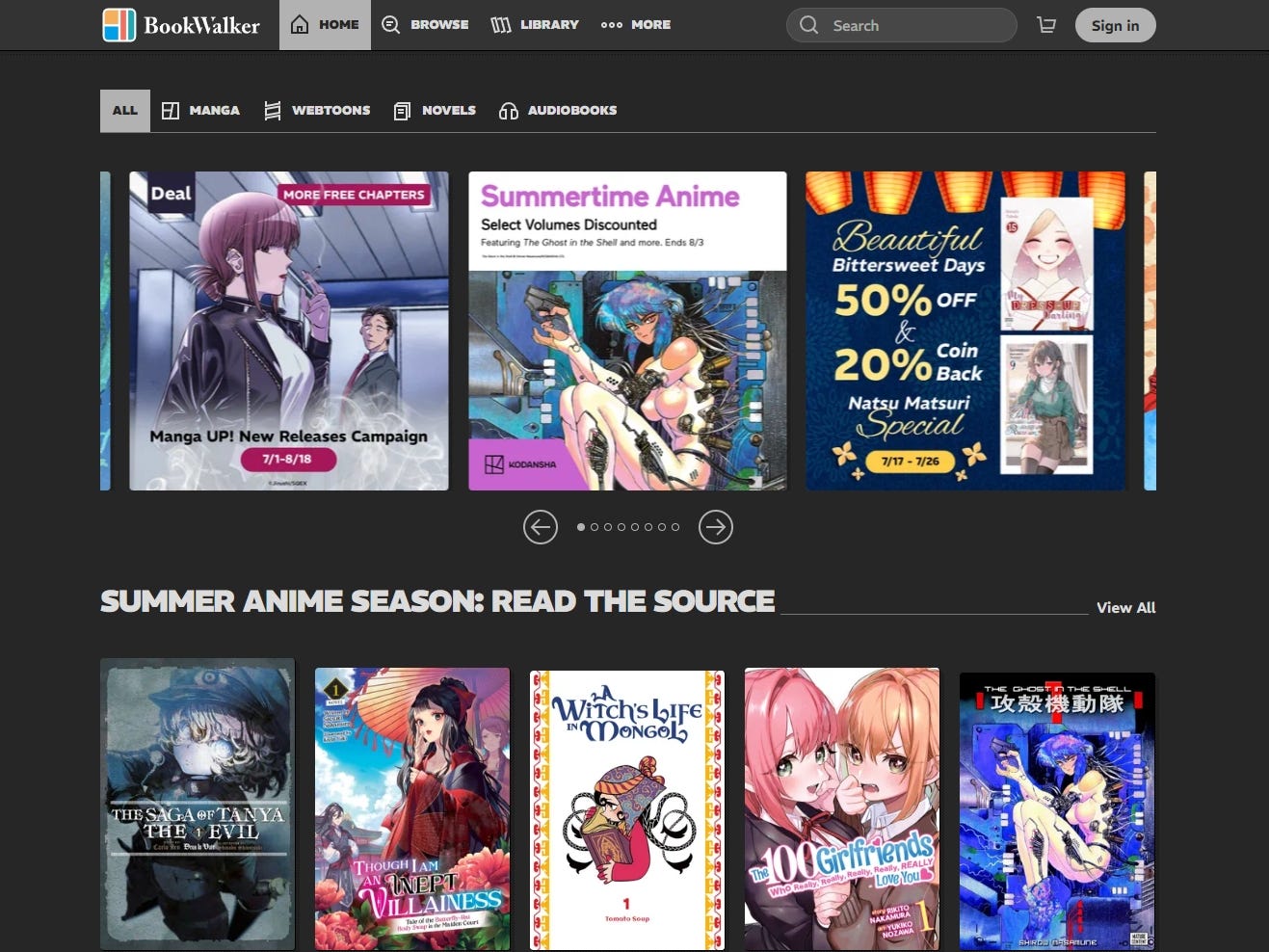
Can you give more context into how LCP DRM was selected? My understanding is that LCP is more heavily used in Europe and that there are some talks about having wider adoption in Japan. How did that conversation come about where it was decided that BookWalker should use LCP?
My primary developer has actually been on the board of the European Digital Reading Lab standards and was involved in the specification-compliant EPUB reader system called Thorium, so the architect of the new system has always been tightly aligned with that group.
There are two other reasons. One is that the licensing fees are very reasonable. Digital rights management technology isn’t free, and Adobe is a classic example of DRM that is available to purchase and use. Adobe’s DRM has a per-title fee, which scales really poorly when we’re selling chapters. The fee for most DRM systems is a flat fee based on each individual title or sale, not a percentage, whereas LCP’s DRM fee schedule is based on the overall size of your business.
If you’re a small software creator and you want to make an EPUB reader that is LCP-compliant, I believe you have to pay in the range of a hundred dollars a year. LCP is really affordable. If you’re a large corporation like us, you’re paying many thousands of dollars, but it’s still affordable, and it’s the best solution because it’s predictable. We know that it’s based off our revenue, not the jumper titles that we’re selling, so it was the best choice financially.
The other reason is because it’s tightly linked with the open standards body that is behind EPUB itself. The LCP DRM people are overlapping with them by a large degree, so there is no better choice for compatibility and futureproofing. All of the other DRM systems are essentially owned by corporations, not non-profit organizations, but our money—our licensing fees—goes to support this nonprofit.
When it comes to protecting publishers’ content and content production in general, the more open standards there are, the better the user experience, and we feel more confident that we can give assurance to the user that when you buy an e-book, you do own it.
I know people will push back on this and say, “If there’s any restriction at all, then you don't own it,” but at the same time, if you buy a physical book, you can’t go and make 100 copies and then sell them. There will always be restrictions up to the copyright law in the country. In this case, the idea is to make those restrictions as transparent and as clear as possible to the consumer, so they know exactly what they’re buying.
Right now, I think the problem that most people have with content protection isn’t the content protection itself. I think actually most consumers believe authors and creators, and maybe even corporations that make things a little bit, should be paid for their work.
What they don’t like about the content protection is the uncertainty: “Do I really own this? What if some magical switch is pulled, and suddenly I can’t read my e-book?” That’s also why, for example, geographic restrictions, among other things, are not good because people will think they can watch something, but then the rules are different and they can’t, so ultimately, the problem with content protection is that the rules aren’t clear and are not clearly stated.
LCP gives us a very clear opportunity to make sure that it’s not just us that are inciting the rules and that we can’t just change them at any point in time.
Support the journalism of Animenomics. By upgrading to a paid subscription, you gain access to additional insights from M12 Media chief executive officer Samuel Pinansky on the philosophy behind BookWalker Global’s business model.
