


This is your weekly Animenomics briefing, covering the business of anime and manga. Today is Wednesday, April 29, 2026.
In case you missed it: CyberAgent publicly announced a television anime adaptation of Takeru Hokazono’s sword action manga and social media darling Kagurabachi, two years after Toyo Keizai reported that the company had won a joint bid with Shochiku for the anime production rights from publisher Shueisha.
Cypic, the anime studio that CyberAgent acquired from its mobile gaming affiliate Cygames, is the main animation contractor for the series, signaling the company’s commitment in developing flagship IPs internally amid a pivot to anime.
Kadokawa doubles down on U.S. manga store expansion
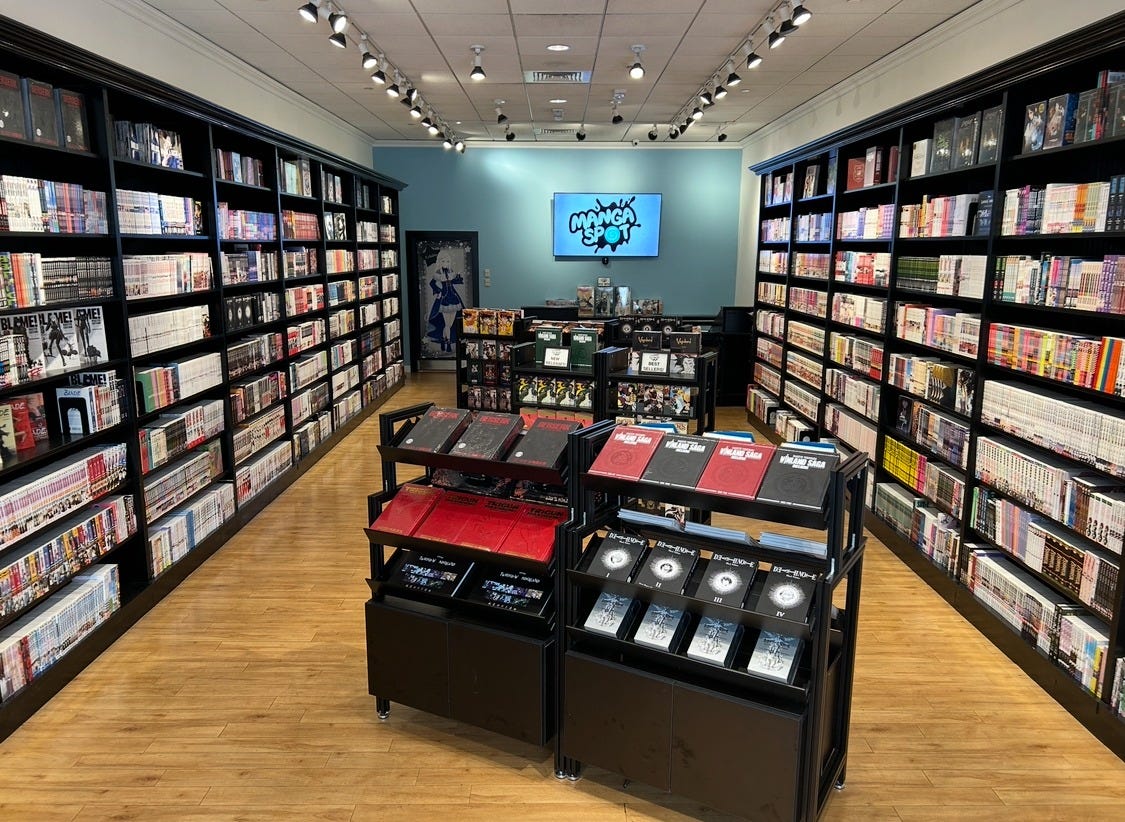
Kadokawa has formed a new subsidiary to oversee its manga retail operations in the United States, two and a half years after the publisher launched a marketing push in North America and began opening a chain of Manga Spot stores.
Why it matters: Kadokawa’s push into retail in North America and other parts of the world demonstrates the publisher’s growing desire to create opportunities to more directly connect with manga readers and other customers.
In the United States, manga publishers especially rely heavily on brick-and-mortar retail stores to convert curious customers into buying ones.
The details: Kadokawa Retail Ventures will be led by Kurt Hassler, who leads manga publisher Yen Press (in which Kadokawa is part owner) and who helped now-defunct retailers Borders and Waldenbooks build expansive manga selections in the 2000s.
Since 2022, Hassler has also been president of Kadokawa World Entertainment, Kadokawa’s North American holding company, to lead publisher’s overall strategy in the region.
In a podcast with comics industry consultant Atom Freeman last year, Hassler outlined his vision of turning Manga Spot as a retail destination for the manga-reading demographic.
“We’re investing a lot in it, but I think it’s worth investing in because the biggest problem most publishers have is that we don’t get enough face time with the customer,” Hassler told Freeman.
Zoom in: Kadokawa has opened ten Manga Spot stores to date in a wide range of cities, from metropolitan areas like New York and Chicago to more remote hubs like Grove City, Penn., and Ketchikan, Alaska, where manga has less retail presence.
Hassler admits that the goal is to turn Manga Spot into a more widespread chain of stores, but “if there’s a comic shop nearby, I’m really not looking to compete with that. I want to go where there’s less competition.”
The intrigue: Hassler sees shopping malls as opportunities for Manga Spot locations despite continuing struggles in the U.S. shopping mall business.
“If a [specialty retailer and longtime anime merchandise distributor] Hot Topic can survive [in shopping malls], why can a Manga Spot not?” Hassler argues.
Broadcasters opt for short anime amid crowded TV slots

Japan’s television broadcasters are making significant investments in anime as anime’s overseas market continues to grow, but challenges in programming and production are forcing them to shift of some of that money toward development of short anime.
Reality check: Broadcasters are constrained by the number of available programming slots on their networks and don’t have enough available airtime in a given week for all the anime being produced today.
What’s happening: To overcome these constraints, Japan’s commercial broadcasters are investing in short anime projects—some as short as 90 seconds per episode—with characters that have strong merchandising opportunities.
Since last year, TV Asahi has been airing an anime based on the emotional support emperor penguin character Koupenchan, whose merchandise market was estimated at ¥5 billion (US$31 million) before the COVID-19 pandemic.
TV Asahi also enlisted its subsidiary anime studio Shin-Ei Animation, of Doraemon and Crayon Shin-chan fame, to help plan short anime projects for the characters Sirotan and Pop Pap Polters, both airing later this year.
Broadcasting group TBS has created a short anime workgroup within its anime department, developing anime for characters like the cat Nmeneko and the San-X teddy bear icon Rilakkuma, plus a new stop-motion series titled Candy Caries.
Zoom in: TV Tokyo, long considered a pioneer in anime broadcasting, will experiment with an anthology approach, airing multiple short anime titles in one 30-minute time slot.
“Creating a 30-minute narrative anime can take three or four years before it’s even broadcast, and it’s expensive and risky to produce, but short anime can be created in one to two years from the initial idea, and they’re much easier to experiment with through trial and error“, TV Tokyo anime department deputy director Nariomi Ishii told The Tsukuru culture magazine.
Clippings: ‘Gundam’ film raises Guns N’ Roses profile
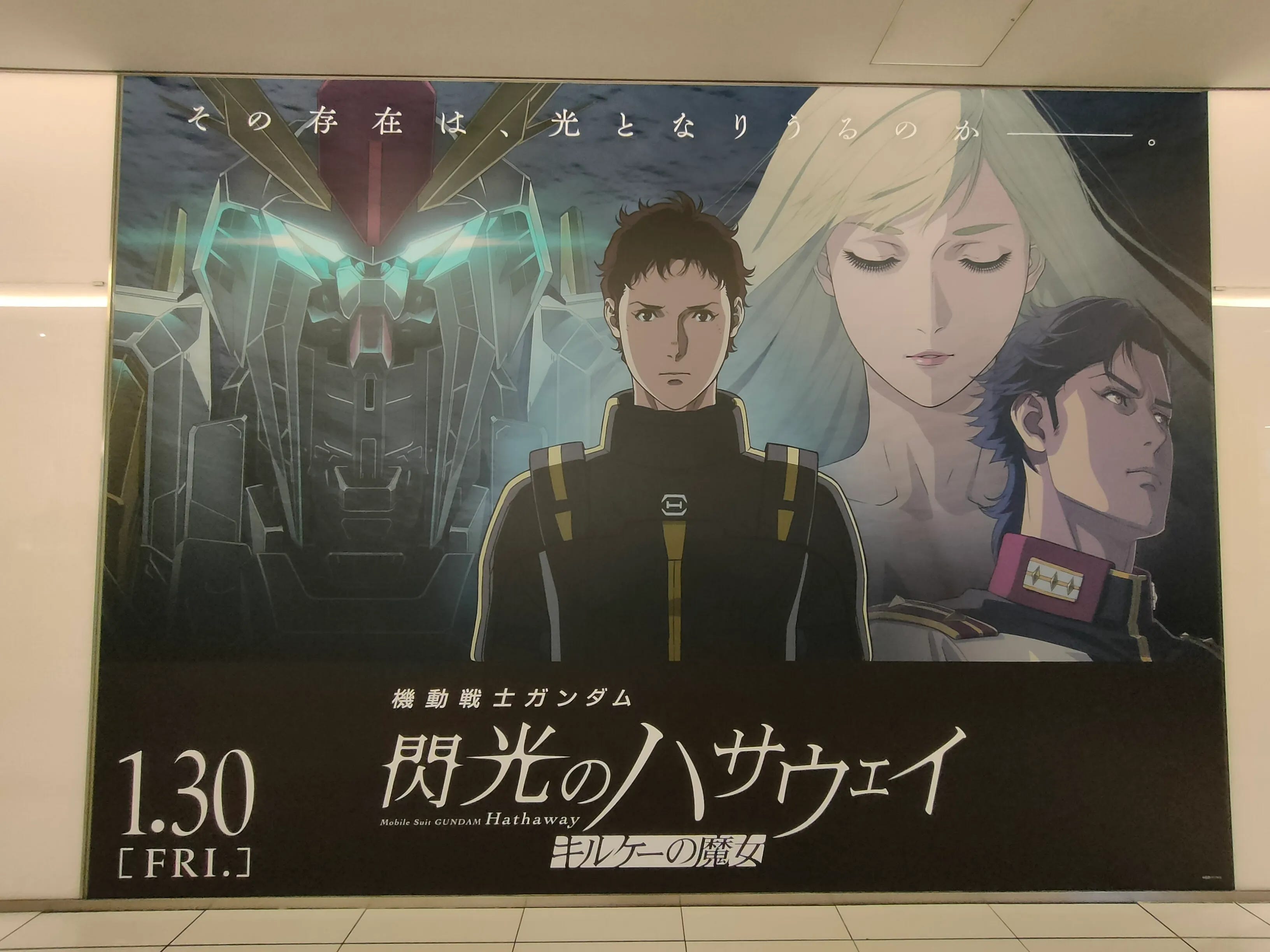
Mobile Suit Gundam Hathaway’s second film has caused streams of hit song “Sweet Child o’ Mine” by hard rock band Guns N’ Roses to quadruple in Japan since the film’s release in January, thanks to its usage as the film’s ending theme. (The Nikkei)
Bandai Namco Filmworks was pessimistic that the band’s record label Universal Music would agree to the proposal, but Demon Slayer’s successes have convinced some artists that collaborations with anime could bring in new fans.
Pony Canyon wrote down ¥6.3 billion (US$39 million) in the value of its anime assets, signaling that the Fuji Media-owned production company might have abandoned a number of anime projects in development. (Otaku Lab)
Pony Canyon posted its third straight quarterly operating loss in the three months ended in December 2025, and revenue was down 21 percent over the previous year, primarily due to a lack of hit anime titles.
Secondhand retailer BookOff opened its 50th overseas location this month, its 22nd in the United States, as demand for anime media and merchandise continues to grow in North America. (The Reuse Economic Journal)
An athlete management agency signed an intellectual property agreement with the Captain Tsubasa protagonist Tsubasa Ozora, giving the agency the ability to represent the character in licensing and community engagement efforts. (The Asahi Shimbun)
Japan’s Ministry of Justice convened a study group to draft guidelines for restricting the unauthorized use of artificial intelligence technology to recreate faces and voices of voice actors and singers. (The Yomiuri Shimbun)
Aichi Prefecture’s Ghibli Park will exhibit new artwork from director Hayao Miyazaki starting in July as the 85-year-old animator continues to work since the completion of his last film in 2023. (The Mainichi)
Japan seeks to avoid heavy-handed regulation in anime
“As a nation, we have to be mindful of one thing: this [entertainment] industry has reached its current stature not because of support from the state or public institutions, but because of the efforts of the creators who produce the content and the fans who cherish it. The challenge lies in how we can support and boost this industry—providing encouragement without interfering or getting in the way—a delicate balancing act that the government has rarely managed to execute successfully in the past.”
— Kimi Onoda, Japanese minister of state for economic security
Context: Onoda, who worked adjacent to the anime industry before entering politics, reiterated to attendees of the Niconico Chokaigi festival of Internet culture over the weekend that Prime Minister Sanae Takaichi’s government is cautiously considering how it much regulatory pressure it should put on the anime industry and the rest of the entertainment sector.
What she’s saying: “We can’t really say how the production committee system for anime should be done or what the industry should do,” Onoda explained, but she believes work needs to be done to standardize production processes in the interest of improving development of human resources.
Animenomics is an independently run and reader-supported publication. If you enjoyed this newsletter, consider sharing it with others.
Worth watching how Kadokawa structures labor and licensing in these US retail operations — Japanese media conglomerates have a habit of exporting content pipelines without exporting the worker protections that were already thin at home. The North America expansion is a test case for whether those standards travel at all.