


This is your weekly Animenomics briefing, covering the business of anime and manga. Today is Wednesday, May 27, 2026.
In case you missed it: Los Angeles’s Anime Expo will host a symposium on Japan’s content industry in collaboration with PopPowerProject, a community of private sector experts seeking to promote development of Japanese content abroad.
On a personal note: I will once again attend Anime Expo this year. If you are also planning to attend and would like to meet, please reach out on LinkedIn or over email.
Iran war raises costs of raw materials in manga printing
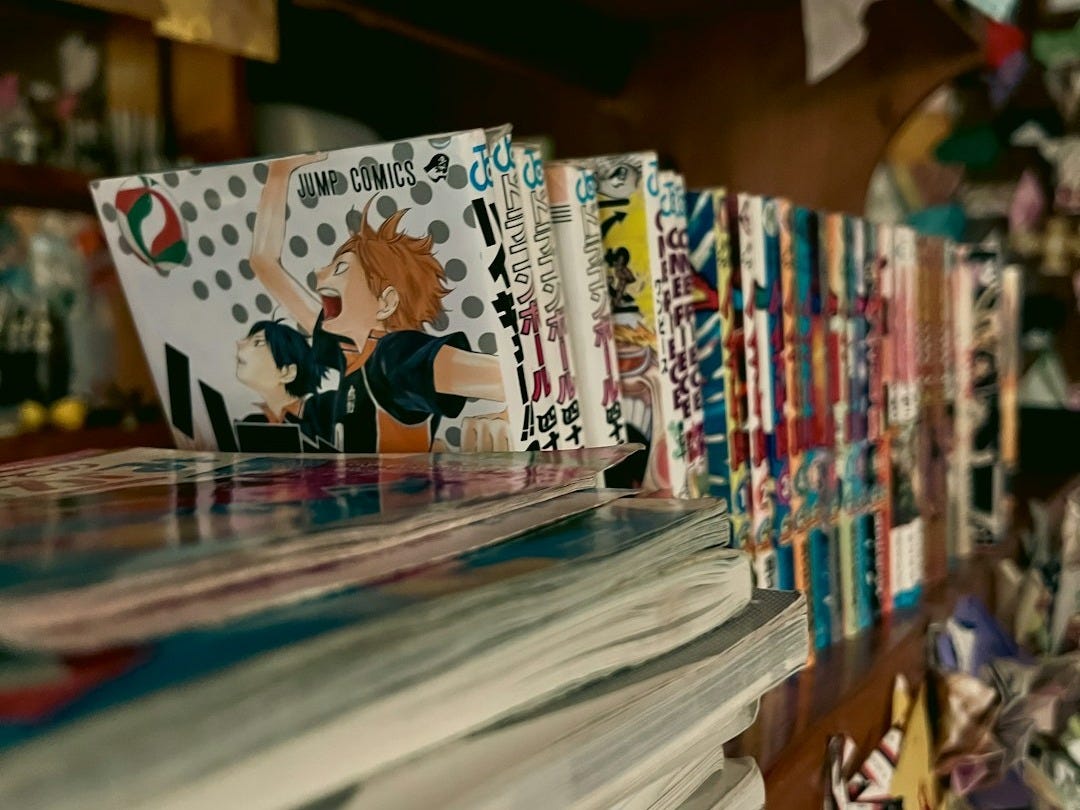
Japan’s manga industry is bracing for the economic impact of war between the United States and Iran as fewer petroleum shipments drive up the price of naphtha, a key raw material in printing, to its highest level in four years.
Why it matters: Printed manga volumes often have glossy dust jackets made using a polypropylene film, a derivative plastic product from naphtha, and ink used in printing those covers also contains solvents made using naphtha.
As of last year, the average price of a manga volume was 24 percent higher than in 2020, according to data compiled by the Research Institute for Publications, and rising printing costs are expected to push prices higher.
Zoom in: Nearly half of Japan’s pulp and paper manufacturers and about 38 percent of publishing and printing companies use naphtha as raw material, according to a survey conducted last month by credit reporting agency Teikoku Databank.
Consumer product manufacturers are now looking for ways to save cost, with Japan’s largest snack maker earlier this month moving to temporarily stop color printing on plastic snack packaging.
Manga artist Chika Ishikawa told followers on social media platform X last month that Ichijinsha, a subsidiary of publisher Kodansha, is ending one of her serialized works early—at two volumes total rather than three—due to rising printing costs.
Rising cost of raw materials is also putting pressure on small and medium printers that support Japan’s dōjinshi market, The Tokyo Shimbun reports, raising concerns that it could result in a decline in self-publishing.
Rewind: This isn’t the first time that the effects of an oil crisis have been felt in Japan’s manga industry.
In the mid-1970s, oil-exporting Arab countries targeted Japan and several other countries with an embargo that resulted in publishers making significant cuts in the number of pages in manga magazines as the cost of raw materials increased.
Japan domestic streaming leader acquires anime studio

Streaming service U-NEXT, Japan’s domestic subscription video-on-demand leader, is acquiring Osaka-based anime studio GoHands from founder Ringo Kishimoto, who formed the studio in 2008 with former members of anime studio Satelight.
Why it matters: U-NEXT is moving to accelerate the growth of in-house productions as licensing costs for broadcast content increase, and it looks to tap into GoHands’s production know-how to make localization of foreign content more efficient.
Catch up quick: As previously reported by Animenomics, U-NEXT operates an e-book publishing business, which the company wants to tap into as a source of new content.
The acquisition is the latest in a series of deals made by content rightsholders to acquire anime studios in order to secure production lines for their own IPs.
U-NEXT faces stiff competition at home from Netflix, and chief executive officer Yasuhide Uno has sought to work with more Japanese content companies in an effort to break Netflix’s hold on the streaming market.
By the numbers: Financial terms of the acquisition were not disclosed, but balance sheet numbers released by U-NEXT show that GoHands has been profitable for the last three fiscal years.
In the twelve months ending in July 2025, it reported ¥1.9 million (US$12,000) in operating profit against ¥464 million (US$2.9 million) in revenue.
Clippings: Itochu invests in character licensing agency

San Francisco-based Octas, a character licensing agency, has received an investment from Itochu as the trading conglomerate seeks to expand global access to Japanese anime and character merchandise. (Bloomberg)
Anime planning firm Twin Engine is forming a joint venture with financial services giant SBI Holdings to develop new anime properties for the global market. (Press release)
Nippon Television has named Kenichi Yoda, an executive who led concert, exhibition, and stage productions at the broadcaster as the new president of Studio Ghibli as the storied anime studio invests in experiential entertainment. (Oricon News)
Late manga artist Kazuo Koike’s copyright management company, which holds the rights to works like Lone Wolf and Cub, has been granted permission by Tokyo District Court to begin bankruptcy proceedings. (Tokyo Shoko Research)
TV Tokyo will release new screen and video game works based on Naruto for anime’s 25th anniversary in 2027. Overseas rights sales for Naruto and its sequel pushed the broadcaster’s anime revenues to a record high in the recent fiscal year. (Otaku Lab)
More than 200 web novels serialized on the Shōsetsuka ni Narō platform have now been adapted into anime, and operators of the service are launching a new partner program to increase support for authors receiving publisher inquiries. (Press release)
1 chart to go: Betting on Crunchyroll anime awards falls
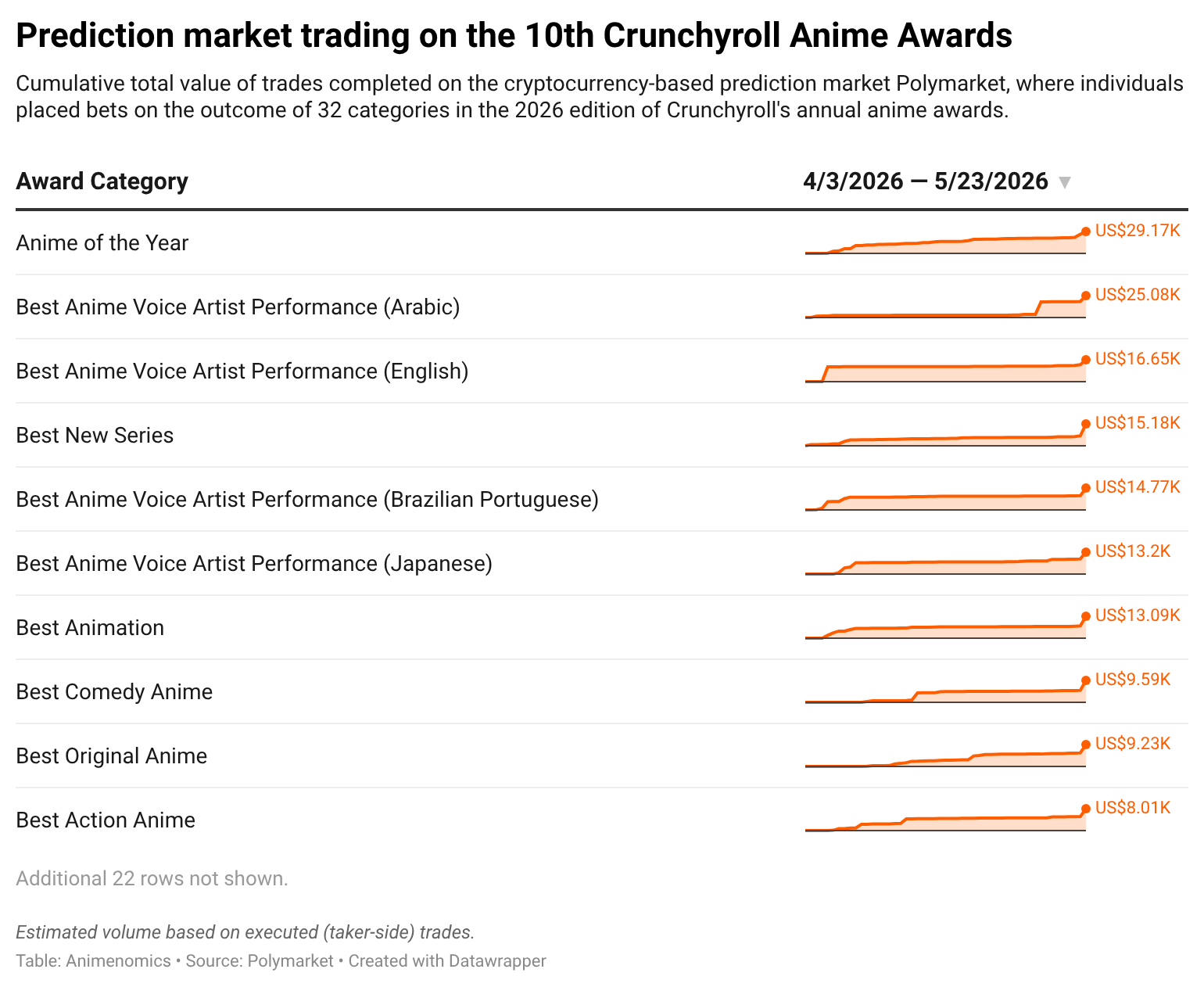
Anime fans around the world cast 43 percent more votes in this year’s edition of the Crunchyroll anime awards than last year, but betting markets related to the event saw significantly less activity compared to 2025.
By the numbers: Polymarket, a cryptocurrency-based prediction market, reported an estimated US$240,000 in trading volume related to this year’s anime awards, a sharp decline from an estimated US$1.6 million in trading volume last year.
Crunchyroll saw the highest engagement in voting activity in markets like Brazil, Germany, India, Mexico, and the United States, but three of these countries now ban prediction markets like Polymarket, and India is likely to follow within weeks.
Animenomics is an independently run and reader-supported publication. If you enjoyed this newsletter, consider sharing it with others.