


This is your weekly Animenomics briefing, covering the business of anime and manga. Today is Wednesday, January 21, 2026.
In case you missed it: AnimeJapan, the anime industry’s annual trade exhibition and business fair, kicked off event programming announcements for its 2026 edition last weekend.
Organizers also announced registration details for the March 30 and 31 business fair days, though ticket sales haven’t opened yet.
Animenomics plans to be in Tokyo to attend AnimeJapan. Please reach out if you are interested in a meeting.
Gaga starts North American distribution of anime films
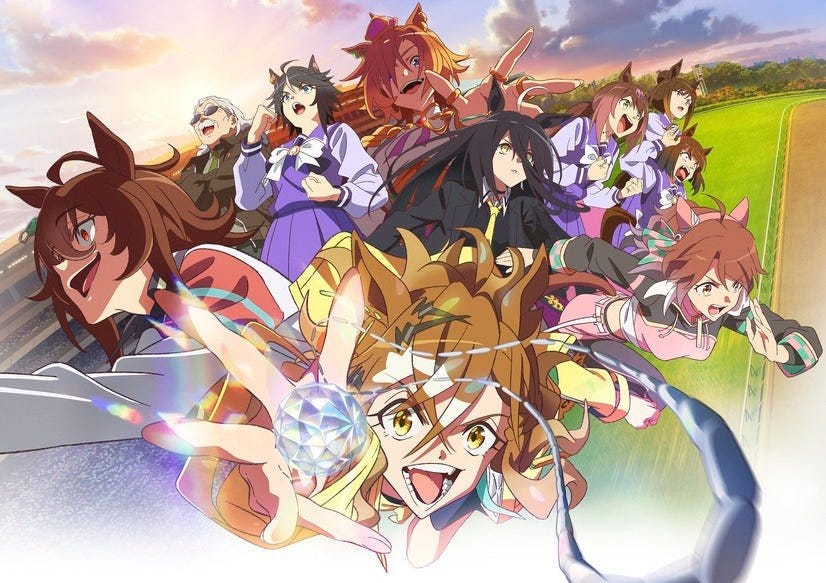
Japanese film distributor Gaga is planning an aggressive expansion of live-action and anime film direct distribution in North America, following a similar move made by film giant Toho in 2024.
Why it matters: Anime films have scored a string of successes in the North American box office in recent years, and Japanese companies are now looking to capture a greater share of the local sales revenue.
When film distribution is handled by local companies, Japanese companies are able to outsource the cost of local promotion and distribution to partners while keeping a focus on rights revenue.
In exchange for this arrangement, however, the local distributor often retains a large share of sales revenue if the film becomes a box office success.
Zoom in: Gaga is launching this effort with next month’s North American release of Umamusume: Pretty Derby – Beginning of A New Era, a film from Cygames’s mobile game franchise that earned ¥1.4 billion (US$8.9 million) in the Japanese box office.
With the release, Gaga seeks to replicate the success of a concert film by Japanese superstar singer Ado, which it distributed on its own across more than 300 theaters last year.
The release of the Umamusume film two years after its debut in Japan comes as the mobile game is growing in popularity after an English-language edition launched in June and won Best Mobile Game at the Game Awards in December.
Yes, but: “Large-scale releases require the know-how of local companies, which poses a high hurdle for Japanese companies,” anime industry journalist Tadashi Sudo writes in Animation Business Journal.
After Toho distributed Godzilla Minus One directly in North America, it acquired New York-based anime and animation film distributor GKIDS to bring that kind of local film distribution expertise in house.
What’s next: Gaga’s corporate parent, amusement giant Genda, said last week that it plans to promote the Umamusume film at the 12,000 gaming corners it has swept up across North America.
Edia ramps up anime production for its own light novels
Tokyo-based Edia is quickly ramping up production of new anime properties after the company launched its anime production business last August, amid a transition from being a mobile services provider into an entertainment company.
Why it matters: Edia’s ownership of light novel and manga publisher Hifumishobo is an advantage for the company as it plays the role of both an originator of new media properties and an anime production investor.
Companies without their own original properties compete to acquire popular IPs, often leading to increased development costs and less favorable terms, Gamebiz reports.
By the numbers: Edia is now developing at least five new anime titles for broadcast in 2028 and beyond, according to the company’s third quarter earnings results, up from three in the prior financial period.
The company plans to scale up investments to tens of millions to several hundred million yen (hundreds of thousands to millions of United States dollars) per anime title, after previously only investing small amounts in production committees.
To learn more about anime production, Edia initially participated in committees for Drugstore in Another World and The Aristocrat’s Otherworldly Adventure, both based on Hifumishobo light novel titles.
The bigger picture: As a production committee organizer and investor, Edia stands to benefit from a greater share of profits that come from licensing out the anime for merchandising, overseas distribution, and other secondary uses.
Clippings: MAPPA partners with Netflix on distribution
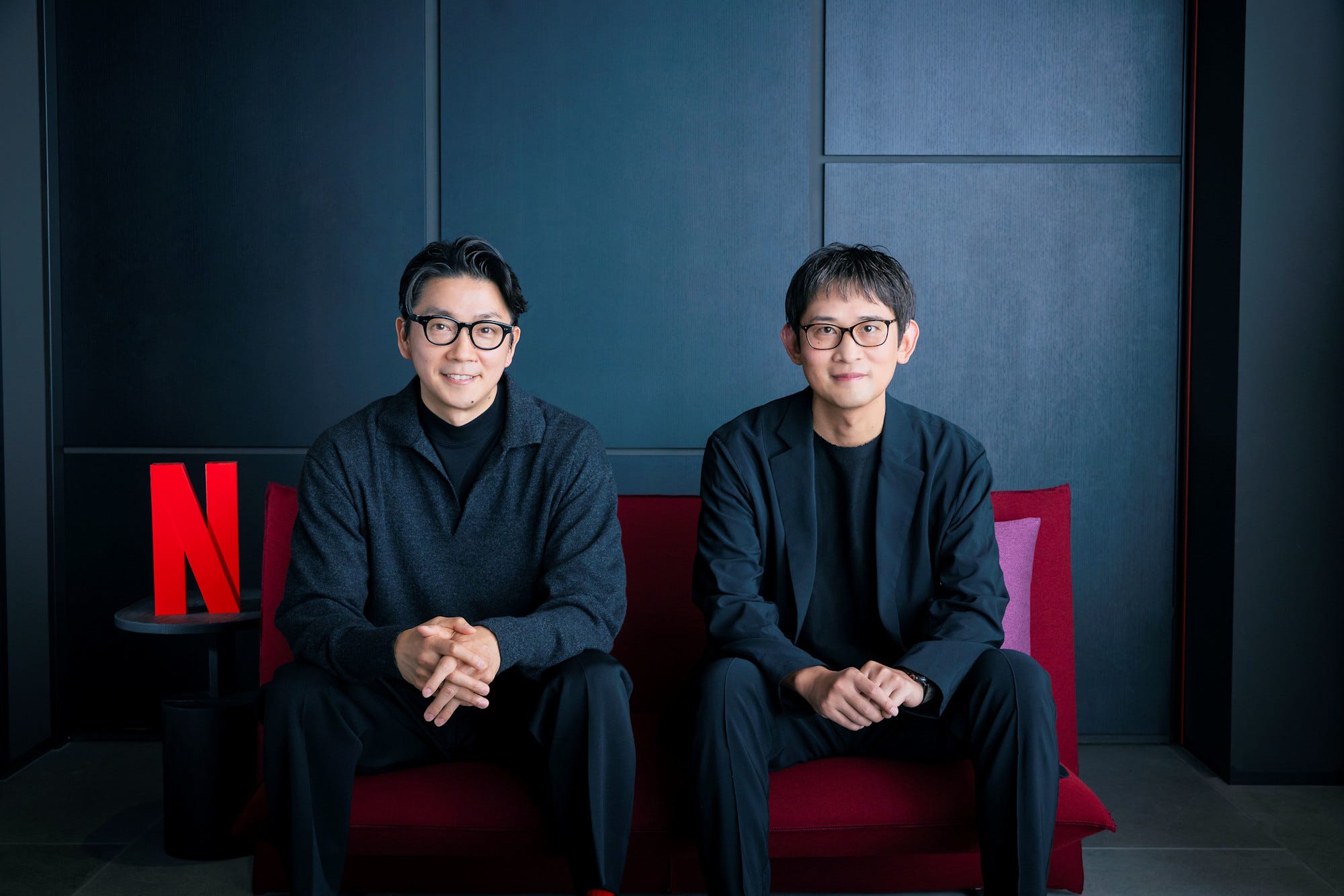
Anime studio MAPPA is deepening its collaboration with Netflix as a distribution partner as it doubles down on a studio-led anime production model where MAPPA is responsible on everything from story development to merchandise strategy. (Nikkei)
Sony Pictures and Netflix announced a global exclusive first streaming window deal that will bring all of Sony’s feature films to Netflix globally after completing their runs in theaters. (IndieWire)
Between the lines: The deal doesn’t include anime films distributed by Sony’s Crunchyroll film business, but it sounds like it might include Mamoru Hosoda’s Scarlet, which isn’t released by Crunchyroll.
Toho is proposing the transfer of its ¥22.2 billion (US$140 million) domestic and overseas video sales and licensing business to subsidiary Toho Global as the film giant establishes a local presence in North America, Southeast Asia, and Europe. (Animation Business Journal)
IG Port warns that an ongoing diplomatic dispute between Beijing and Tokyo over Taiwan could affect its anime merchandise sales and licensing if the former introduces stricter regulations on the handling of Japanese media properties. (Gamebiz)
Spirited Away’s stage production sold 30,000 advance tickets in South Korea prior to its January 7 premiere in the country. It’s said to be the largest Japanese-language production in the history of South Korean theater. (Nikkei)
AI manga translations could sap public interest in Japan
“The success of Japanese manga overseas is thanks to foreign publishers. […] Despite this, Japanese publishers, now facing limitations in the domestic market, are developing generative AI and platforms to sell digital versions directly overseas, completely disregarding the role of these foreign publishers.”
— Karyn Nishimura, Tokyo-based French freelance journalist
Context: Nishimura, in a column for Newsweek Japan, argues that manga publishers’ overtures into using artificial intelligence technology for translation risk alienating the foreign manga translators whose work generate public interest in Japanese culture.
Catch up quick: Mantra, an AI translation startup that has received investments from publishers, now has the capacity to produce 20,000 translated manga pages a month, up from 10,000 two years ago, founder Shonosuke Ishiwatari told the Nikkei financial newspaper.
Publishers say AI-assisted manga translation gives them the ability to deliver new works to readers around the world more quickly, before pirated copies have the chance to proliferate online.
The bottom line: “Generative AI is merely a tool to increase sales through efficiency,” Nishimura argues.
“The widespread use of generative AI in manga distribution is putting the cart before the horse and carries a high risk of undermining interest in the Japanese language and in Japan itself.”
Animenomics is an independently run and reader-supported publication. If you enjoyed this newsletter, consider sharing it with others.