


This is your weekly Animenomics briefing, covering the business of anime and manga. Today is Wednesday, October 21, 2026.
In case you missed it: Crunchyroll officially launched its anime streaming service in South Korea earlier this month with two subscription tiers.
Anime, manga websites hit by AI-powered cyberattacks
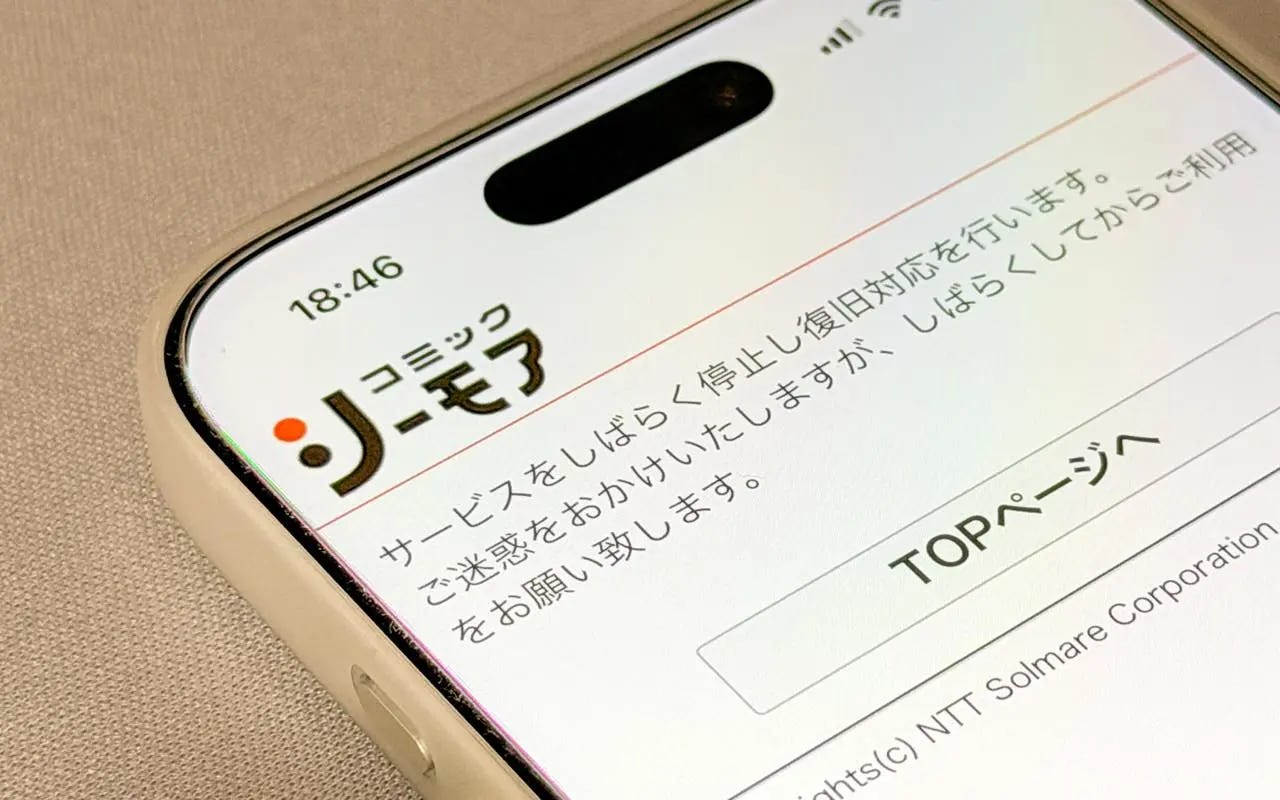
A wave of large cyberattacks that have exposed millions of consumers’ personal data at Japanese companies is spreading to domestic e-commerce sites selling anime and manga products.
Why it matters: Japan’s anime and manga platforms have long existed in their own Internet ecosystem, but the growing global popularity of both mediums means more visitors are accessing their websites seeking content not available overseas.
What’s happening: NTT Solmare on Thursday voluntarily took down Comic C’moA, one of Japan’s largest digital manga and e-book platforms with 40 million monthly active users, for security updates after the company identified a data breach.
E-book distributor Papyless similarly took down both the Japanese- and English-language websites of Renta!, Japan’s oldest digital manga service, after it found a breach on Sunday.
On Wednesday, Dai Nippon Printing began blocking non-Japanese IP addresses from accessing its e-book marketplace Honto after a data breach was identified at email campaign software vendor Ymirlink.
Anime and manga retailers Animate, Gamers, and Melonbooks also blocked non-Japanese IP addresses from accessing their online stores while security updates are being made, though no data breaches have been reported.
Rewind: Two years ago, a ransomware attack crippled core business functions such as book production, e-commerce, and accounting systems at publishing giant Kadokawa and brought down the Niconico video sharing service for two months.
The cyberattack inflicted a 3 percent hit on Kadokawa’s revenue and a 22 percent hit on operating profit that fiscal year.
Zoom out: Japanese companies have reported more than 650 cybersecurity incidents so far this year, according to an analysis by cybersecurity firm Trend Micro, surpassing the previous record seen in 2024.
A survey of 1,300 companies by credit reporting agency Teikoku Databank found that while large companies are targeted more often—8.8 percent reported data breaches in the last year—cyberattacks are also hitting small and medium firms.
Cybersecurity experts interviewed by Bloomberg and by The New York Times say the use of artificial intelligence is making it easier for hackers to launch attacks.
Toho reports record overseas anime streaming revenue

Several major anime and manga companies have fiscal quarters or fiscal years ending in August and report those earnings this month. Below is a selection of insights from recent earnings reports.
Film giant Toho saw overseas anime streaming revenue jump more than 62 percent year-over-year to a record ¥9 billion (US$57 million) for the six months ended in August, the company said in its mid-year earnings presentation last week.
Domestic anime streaming revenue slipped almost 6 percent year-over-year to ¥5.5 billion (US$35 million), though it was offset by a 13 percent rise in character licensing revenue at home.
Cumulative revenue from Toho’s anime and Godzilla IP segment reached a record high in the same period, climbing more than 15 percent, but upfront investments in IP squeezed operating profit by 44 percent.
What we’re watching: A change in how Toho recognizes overseas revenue in the anime and IP business means a large amount of revenue recorded by Toho Global won’t be reported until the third quarter.
IG Port reported for the first time since 2023 a quarterly operating profit in the anime production business, which includes the anime studios Production I.G and Wit Studio, for the three months ending in August.
Negotiations resulted in an increased budget for a number of anime productions that were previously contracted, and those higher studio revenues were reflected ahead of schedule.
Yes, but: Rising costs in anime production remain a concern, and it’s forecasting only ¥27 million (US$170,000) in operating profit in the studio business—just 0.3 percent in operating margin—for the fiscal year ending in May 2027.
One big thing: Merchandising revenue is projected to fall 42 percent this fiscal year to ¥660 million (US$4.2 million), far less than the ¥2.4 billion (US$15 million) originally promised to investors two years ago.
Light novel and manga publisher Overlap reported flat revenue and a 20 percent drop in operating profit for the fiscal year ended in August due to e-book sales that are weaker than expected for titles that were adapted into anime.
While only two anime series based on Overlap titles are scheduled to air in the fiscal year ending in August 2027, the company expects to see up to six anime titles in each of the subsequent two fiscal years.
What we’re watching: The company says it’s exploring the possibility of entering direct publishing of light novels and manga overseas.
Satellite broadcaster BS11 is growing its anime revenue base, helping increase the share of non-broadcasting revenue from 7.7 percent to 10.4 percent in the fiscal year ended in August.
BS11 is one of Japan’s most prolific investors in anime production, participating in at least 70 production committees in 2024 and 2025—one out of every six anime series airing over those two years—according to a study published in December.
Today, the broadcaster airs 40 anime series every quarter, and it’s expanding a year-old collaboration with figurine maker Kotobukiya on anime merchandise.
Clippings: Rising printing costs put pressure on dōjinshi

Comic Market vendors are facing pressure to increase dōjinshi—self-published zines and fan-created manga—prices as Japanese offset printers see printing costs such as raw materials and labor rise more than 40 percent since 2020. (Nikkei)
Kodansha acquired Tops, a Tokyo-based original design manufacturer of figurines and other anime and video game character merchandise, as the publisher moves to increase investment in merchandise licensing based on its own IPs. (Nikkei)
TV Tokyo acquired a 20 percent stake in illustration and manga production studio Whomor as the broadcaster moves to accelerate production of anime merchandise using original illustrations. (Press release)
The Japan Actors Union, which also represents voice actors, released new guidelines requiring consent before actors’ voices can be reproduced using artificial intelligence technology. (The Asahi Shimbun)
Japan’s government is drafting plans to establish a corporation that will administer subsidies across multiple ministries and offices for video games, anime, manga, music and live-action film and television productions. (The Yomiuri Shimbun)
Writer Jun Maeda, the celebrated visual novel creator and composer of Clannad, Air, and Kanon who also serves as an executive officer at visual novel publisher Visual Arts, has pharyngeal cancer but is choosing to forgo treatment. (Automaton West)
Our thought bubble: Maeda, 51, plays a key creative role at Visual Arts, which was sold to Chinese technology conglomerate Tencent in 2023, and an unexpected death could alter the studio’s future creative identity.
Seven Seas adds Japanese trade fiction to double output
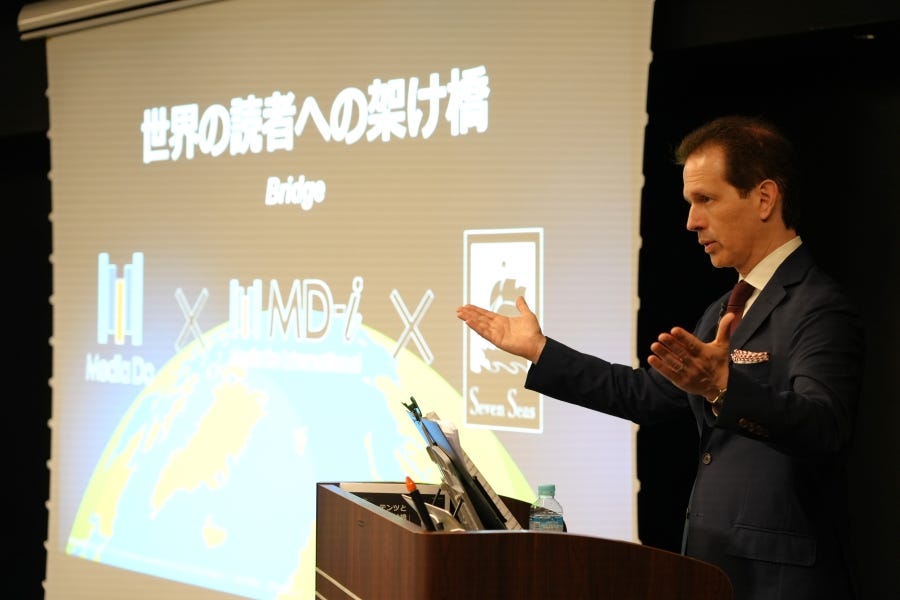
Japanese e-book distribution giant Media Do wants to double the translation output of Seven Seas Entertainment, the North American manga and light novel publisher it acquired earlier this year, to more than 2,000 books annually by 2030.
Why it matters: Media Do completed the Seven Seas acquisition with ¥12.4 billion (US$78 million) in bank loans, and it’s eager to prove to investors that the purchase was worth the company taking on that much debt.
Rewind: Just six weeks after the Seven Seas deal was announced, a selloff by nervous investors caused Media Do’s share price on the Tokyo Stock Exchange to fall by more than 20 percent, where it still hovers today.
“The transaction employed a structure designed to maximize tax benefits, limiting the effective risk exposure to slightly less than 60 percent, and we will work to dispel the current uncertainty surrounding the acquisition,” chief executive officer Yasushi Fujita said in an interview published in his company’s 2026 annual report.
By the numbers: Media Do expects only US$47 million to remain as the effective risk amount on its balance sheet after subtracting the value of Seven Seas’s assets and an estimated US$19 million in tax benefits based on the terms of the acquisition.
With Seven Seas taking in an annual operating profit of US$10 million at this time, Media Do anticipates risk payback within five years or less.
Where things stand: Seven Seas is expected to publish more than 1,200 books in this fiscal year ending in February, Media Do said in its mid-year earnings presentation last week.
Last month, Seven Seas began advertising a new publishing director position to focus on bringing Japanese fiction to the United States trade market, growing its portfolio beyond manga and light novels in order to meet the publishing goal.
Animenomics is an independently run and reader-supported publication. If you enjoyed this newsletter, consider sharing it with others.
Ah, ok, that’s what I figured when I heard the site went down, but I wasn’t sure. Great reporting.
I do wonder if this wave of cyberattacks was in some way made possible due to the recently discovered security vulnerabilities in the PHP language...