


This is your weekly Animenomics briefing, covering the business of anime and manga. Today is Wednesday, June 10, 2026.
In case you missed it: Toei (not to be confused with Toei Animation) announced an effort to develop the superhero media franchise Kamen Rider into anime projects, one year after the film production company established an anime IP department.
Crunchyroll boosts production committee participation

Crunchyroll has become the most prolific investor in anime productions, participating in more production committees than any other company, Japanese or otherwise, in the last two years, according to an analysis of publicly available anime production data.
Why it matters: Committee participation gives Crunchyroll the ability to secure rights to anime titles for streaming without having to bid for licenses, plus it receives a share of anime production earnings.
By the numbers: In 2024 and 2025, Crunchyroll funded at least 87 productions of anime titles whose episodes are 30 minutes in length, according to a study published at Tokyo’s Comic Market 107 in December.
That figure accounts for 21 percent of the 417 full-length anime titles newly aired on Japanese terrestrial and satellite television over that time period, the report’s author, anime columnist Fuyuki Kurohara, found.
The number of Crunchyroll’s investments in the last two years overtook that of Japanese publisher Kadokawa, which participated in 82 committees and was also the most prolific investor in the 2022–2023 period.
Zoom in: Crunchyroll’s subsidiary in Japan, which makes the committee investments and receives the proceeds from their profits, earned ¥1.7 billion (US$10.6 million) in net profit over the last two years, according to a recent filing.
Retained earnings in Crunchyroll’s Japanese business turned positive in 2024 and rose to ¥640 million (US$4 million) last year, accumulating profits that it can use to invest in subsequent new projects.
This is a stark turnaround from 2021, the year Crunchyroll was acquired by Sony Pictures Entertainment, when the company’s Japanese businesses saw combined cumulative losses of ¥907 million (US$5.7 million).
Between the lines: Crunchyroll only led production committees in a pair of instances, in Meiji Gekken: 1874 (through subsidiary Crunchy Onigiri) and Tower of God Season 2, which means the company isn’t usually the one commissioning anime projects.
Kadokawa and Sony Music Entertainment Japan unit Aniplex are still the top two companies commissioning new anime, coordinating a combined 24 percent of all production committees.
“It’s mutually beneficial to get Crunchyroll distribution locked in early, but it’s not necessary for it to be a Crunchyroll-led project, particularly when their corporate cousin Aniplex […] is often also on the production team,” Miles Atherton, head of anime consultancy White Box Entertainment, explained in a column last year.
Anime planned for British-turned-Japanese kid lit series
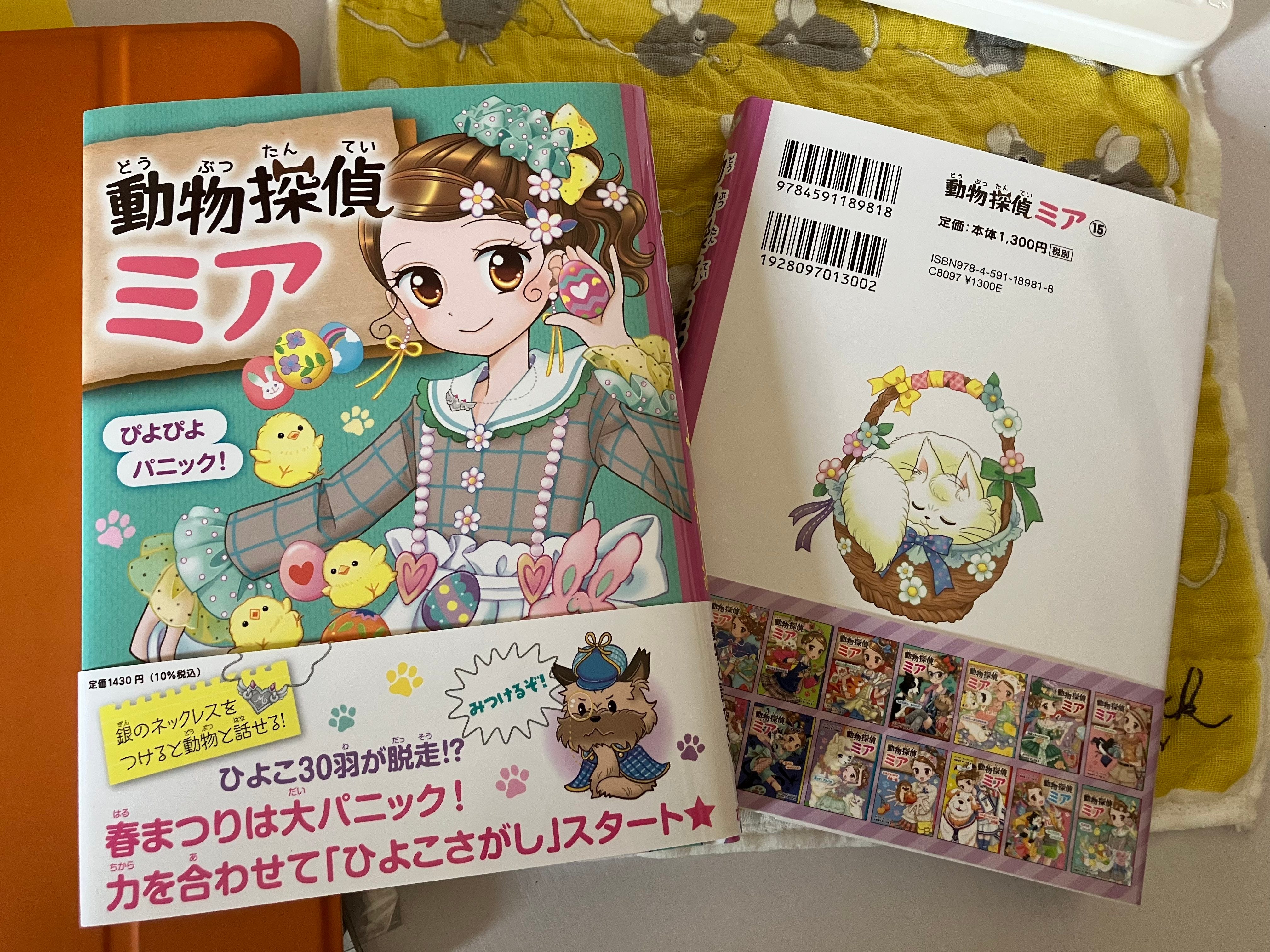
An anime adaptation is being planned for Animal Detective Mia, a Japanese children’s novel series that has 350,000 copies in circulation and based on the British series Amy Wild, Animal Talker by Diana Kimpton, Animenomics has learned.
Why it matters: British children’s literature has long been a valuable source of stories for anime, such as Academy Award nominees Howl’s Moving Castle and When Marnie Was There and Studio Ponoc’s Mary and the Witch’s Flower.
The intrigue: Animal Detective Mia found more success abroad than in its home market, with Kimpton writing additional volumes specifically for the Japanese market.
“This is the media mix in reverse,” says executive producer Jerome Mazandarani. “Not a Japanese property expanding outward, but a foreign property absorbed so completely that Japan became its primary creative engine.”
Mia’s publisher, Tokyo-based Poplar Publishing, has had other titles in its catalog, like The Klutzy Witch, Lonely Castle in the Mirror, and Love All Play, adapted into anime in recent years.
How it happened: Qatar-based filmmaker-turned-lawyer and investor Bruce Johnson acquired the series and film rights for Amy Wild from Usborne Publishing in London and character design rights for Mia from Poplar.
Mazandarani assembled a creative team that produced a 30-second preview that was released to promote Mia’s 15th volume, the seventh original release in Japan.
The bigger picture: Demand for anime and manga is growing worldwide, especially among younger audiences, but the number of titles created for children is in decline as Japan’s population ages, creating a disconnect with the global market.
Total anime programming minutes in daytime Japanese television, targeted for children and families, declined 40 percent between 2014 and 2024, according to the Association of Japanese Animations.
Circulation of children’s manga magazines are also in decline in Japan, yet manga publishers in the United States are racing to find titles for middle grade readers.
Clippings: Activist investor asks Kadokawa to sack CEO
Hedge fund manager Oasis Management received the backing of American proxy advisory firm Institutional Shareholder Services in calling for the removal of Kadokawa chief executive officer Takeshi Natsuno. (The Nikkei)
Writing on X, Dwango founder Nobuo Kawakami, who sits on Kadokawa’s board of directors, argued that Natsuno remains the person best suited to turn around poor financial performance in Kadokawa’s anime and publishing businesses.
Young women in China are snapping up gold accessories featuring anime character designs licensed from rightsholders, but demand is also fueling a market for products that aren’t officially licensed. (Kyodo News via The Mainichi)
Fuji Television launched a webtoon label in partnership with four Japanese webtoon studios, with plans to develop titles into multimedia projects involving music, events, and television programs. (Kai-You)
Japan’s Ministry of Finance is considering a revision of its coinage laws to allow for the issuance of circulating coins that bear engravings of anime and manga characters as a way to promote Japan’s national brand. (The Asahi Shimbun)
Bushiroad’s Takaaki Kidani, in a trip to China last October, observed that Japanese versions of the company’s trading cards sold better in coastal cities, whereas Chinese versions were more popular in inland cities. (Youyan Club)
Japan’s development aid agency is dispatching intellectual property law specialists to Indonesia, Vietnam, and eight other emerging markets countries to help craft legal frameworks for protecting Japanese content from piracy. (Nikkei Asia)
Reading manga in print improves memory recall time when compared to reading on digital devices, according to a new peer-reviewed study conducted by the University of Tokyo and manga publisher Coamix. (PLOS One, The Mainichi)
Slipping print manga sales drag down book distributors
Nippan Group Holdings, reeling from a ¥4 billion (US$25 million) operating loss from book distribution in the twelve months ending in March 2026, is weighing an exit from the book wholesale business, the Nikkei financial newspaper reports.
What they’re saying: “We feel a sense of crisis that we are facing a situation where we must consider withdrawing from the distribution business,” chief executive officer Takeru Togashi told local media during the company’s year-end earnings presentation.
Why it matters: Nippan is Japan’s second largest book wholesaler, and a withdrawal by the company would fundamentally reshape the country’s publishing industry.
Backgrounder: Nippan and the number one wholesaler, Tohan, together hold about 60 percent of the country’s book distribution business.
The two companies play crucial logistical and financial roles in book publishing: transporting books to stores, arranging book placements in stores, and making advance payments before books are sold.
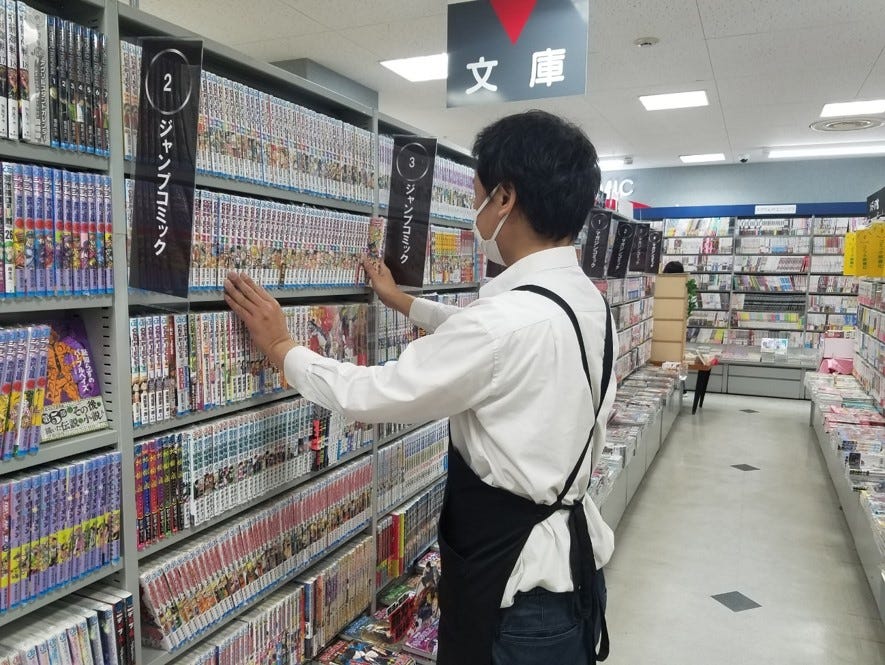
Where things stand: Nippan’s book distribution business is collapsing as the number of bookstores operating in Japan halved in the last 20 years, and manga distribution revenue shrunk by 17.5 percent year-over-year to ¥35.4 billion (US$221 million).
As previously reported by Animenomics, the company last year already stopped selling magazines to convenience stores as manga magazines wane, and demand for print manga is also falling more broadly.
Animenomics is an independently run and reader-supported publication. If you enjoyed this newsletter, consider sharing it with others.